
Payloader Guide: What It Is and How to Choose One
A payloader is a wheel loader with a front bucket. Learn what it does, how it differs from a forklift, and what drives payloader price before you buy.
A payloader is a heavy wheeled machine with a large front-mounted bucket that scoops, lifts, carries and dumps loose bulk material such as sand, gravel, coal, soil and aggregate. The name dates to the Hough Company's 1930s "Payloader" line and is still used across Asia, Africa and the Middle East as a generic term for what much of the industry calls a wheel loader or front-end loader. If you are sourcing a payloader for a quarry, batching plant, port or construction site, this guide explains what the machine does, how it differs from a forklift, and the factors that move payloader price up or down.
What a payloader actually does on site
A payloader is built around three motions: crowd (driving the bucket into the pile), lift (raising the loaded bucket) and dump (tipping the bucket into a truck, hopper or stockpile). That cycle is repeated thousands of times a shift, so the machine is judged on cycle time and stability under load rather than top speed.
Typical duties include:
- Loading tipper trucks and hoppers at sand, gravel and aggregate yards
- Stockpiling and blending bulk raw materials
- Cleaning up around crushers, batching plants and port storage areas
- Handling coal, fertiliser, grain and other loose commodities with the appropriate bucket
- Site clearance and light earthmoving where a dedicated excavator is not justified
The machine's value comes from mobility: a wheeled payloader can travel between stockpiles and trucks under its own power, which is why it is often the busiest unit on a bulk handling site.
Payloader vs forklift: which machine fits the job
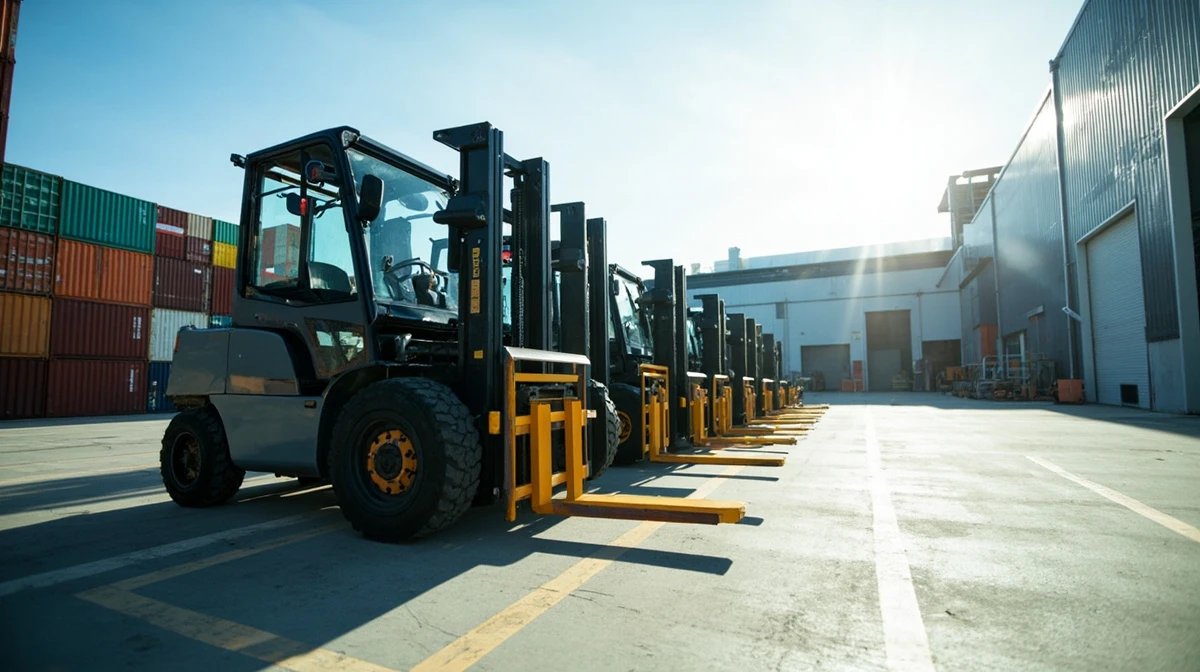
Buyers often compare a payloader with a forklift because both lift and carry. The distinction is the load interface and the surface. A payloader uses a bucket to move loose, un-palletised material from a pile. A forklift uses forks to move palletised, crated or bundled loads, and it needs a prepared surface to work safely.
| Factor | Payloader (wheel loader) | Forklift truck |
|---|---|---|
| Typical attachment | Bucket, with forks or grapple as options | Forks, with bucket or clamp as options |
| Material handled | Loose bulk: sand, gravel, coal, soil | Palletised, crated or bundled loads |
| Ground conditions | Rough yards, stockpiles, unpaved sites | Warehouse floors and paved yards |
| Lift height | Loading height for trucks and hoppers | Racking heights, typically 3,000 mm and above |
| Best fit | Quarries, batching plants, ports, construction | Warehousing, manufacturing, logistics |
Where a site handles both bulk and palletised goods, many operators run a forklift with a bolt-on bucket or a payloader with fork attachments rather than buying two machines. Impetus supplies forklift attachments and forks that let a standard counterbalance truck handle light bulk work, and diesel forklifts from the FD20 at 2,000 kg up to the FD120C at 12,000 kg for heavier palletised loads.
What drives payloader price
There is no single list price for a payloader because the machine is configured around the job. The cost of a payloader is driven by five variables:
- Operating weight and rated load. A compact site machine and a mining-class loader are different products with different price bands. Heavier machines need stronger axles, larger tyres and more hydraulic capacity.
- Engine and drivetrain. Emissions tier, transmission type and axle configuration all affect cost, and export markets often specify a particular tier.
- Bucket and attachment package. General-purpose, light-material and heavy-duty buckets are priced differently, and forks, grapples and quick-couplers add cost.
- Hydraulics and cab. Load-sensing hydraulics, joystick control, air conditioning and ROPS/FOPS cabs are common cost adders in export specifications.
- Freight, duty and after-sales. Shipping terms, import duty and the availability of spare parts locally can outweigh a small difference in ex-works price.
When you request a payloader for sale quote, ask for the configuration sheet alongside the price so you are comparing like with like. A lower headline figure often reflects a smaller bucket, a lower emissions tier or a basic cab.
How to specify a payloader for your site
Start from the material and the truck, not from the machine. Work through these questions before you shortlist:
- What is the bulk density of the material? Coal and grain are far lighter per cubic metre than wet sand or iron ore, so the same bucket carries very different weights.
- What is the loading height? The dump clearance must comfortably exceed the side height of your trucks or hopper.
- What is the travel distance? Long carry distances favour larger machines; tight yards favour compact ones with a short turning radius.
- What is the ground like? Soft or uneven ground calls for larger tyres, better traction and, in some cases, a different machine class entirely.
- Who will service it? Confirm that filters, brake parts and hydraulic components are available locally before you commit.
For sites that also move palletised loads, it is worth reviewing the full Impetus forklift and equipment catalog to see where a counterbalance truck or an off-road forklift such as the RT30 can replace a second payloader.
Where a forklift or off-road truck is the better buy
A payloader is not the right answer for every bulk handling task. If material arrives on pallets, in bags or in crates, a forklift will usually be cheaper to buy, cheaper to run and easier to maintain. Impetus builds diesel forklifts from 2,000 kg to 12,000 kg, lithium electric forklifts from 1,500 kg to 10,000 kg, and off-road diesel trucks in 2WD and 4WD for yards that are unpaved but still pallet-based.
For mixed sites, the practical route is often a forklift plus attachments: a bucket or grab on a 3,000 kg or 5,000 kg truck handles light bulk and palletised goods with one machine and one operator. That configuration frequently delivers a lower total cost of ownership than adding a dedicated payloader for occasional bulk work.
Frequently asked questions
Is a payloader the same as a wheel loader?
Yes. "Payloader" is a trade name that became a generic term for a wheeled front-end loader with a bucket. In most export markets the two terms are used interchangeably, and specification sheets will describe the same machine.
What is the typical cost of a payloader?
The cost of a payloader depends on operating weight, engine tier, bucket size and cab specification, so it varies widely between a compact site machine and a mining-class loader. Request a configuration-specific quote rather than relying on a single headline price, and compare freight and spare-parts support alongside the machine price.
Can a forklift do the work of a payloader?
For light bulk material and short carry distances, a counterbalance forklift fitted with a bucket attachment can replace a payloader. For heavy, abrasive bulk handling at volume, a purpose-built payloader is more productive and more durable. Match the machine to the material, the ground and the duty cycle.
Next step
If you are weighing a payloader against a forklift, or need attachments to get more from an existing truck, send us your material type, load weight and site conditions. Impetus has supplied material handling and construction equipment from Xiamen to more than 150 countries for over 20 years. Contact Impetus for a quote and we will recommend a configuration rather than a catalogue number.