
Pallet Jack Guide: Manual & Electric Pallet Trucks
A practical pallet jack guide for buyers: manual vs electric pallet trucks, capacity and fork sizing, safety checks, and how to buy electric pallet jack units.
A pallet jack is the lowest-cost way to move a loaded pallet across a flat floor: forks slide into the pallet, a hydraulic pump lifts the load a few centimetres, and the operator pulls or drives it to the next position. Because it does one job well and costs a fraction of a counterbalance forklift, it remains the most common piece of material handling equipment in warehouses, retail back rooms, workshops and export packing halls. This guide covers how a pallet jack works, how to size one, how manual and electric pallet trucks differ, and what to check before you buy electric pallet jack units for a fleet.
What a pallet jack does, and what it does not do
A pallet jack — also called a pallet truck or hand pallet truck — is a low-lift truck. It raises a pallet just enough to clear the floor, typically a few centimetres, and moves it horizontally. It is not a stacking machine. If you need to place loads on racking above floor level, you need a forklift or a reach truck, not a pallet jack.
That limitation is also the reason pallet jacks are so efficient. There is no mast, no counterweight and very little to maintain. A manual unit is powered by the operator; an electric pallet jack adds a battery-powered drive motor and, on most models, an electric lift pump as well.
Typical applications include:
- Loading and unloading trailers at floor level
- Moving pallets between production, staging and dispatch areas
- Order picking in aisles too narrow for a forklift
- Retail and wholesale back-of-house stock movement
- Container stuffing and de-stuffing in export operations
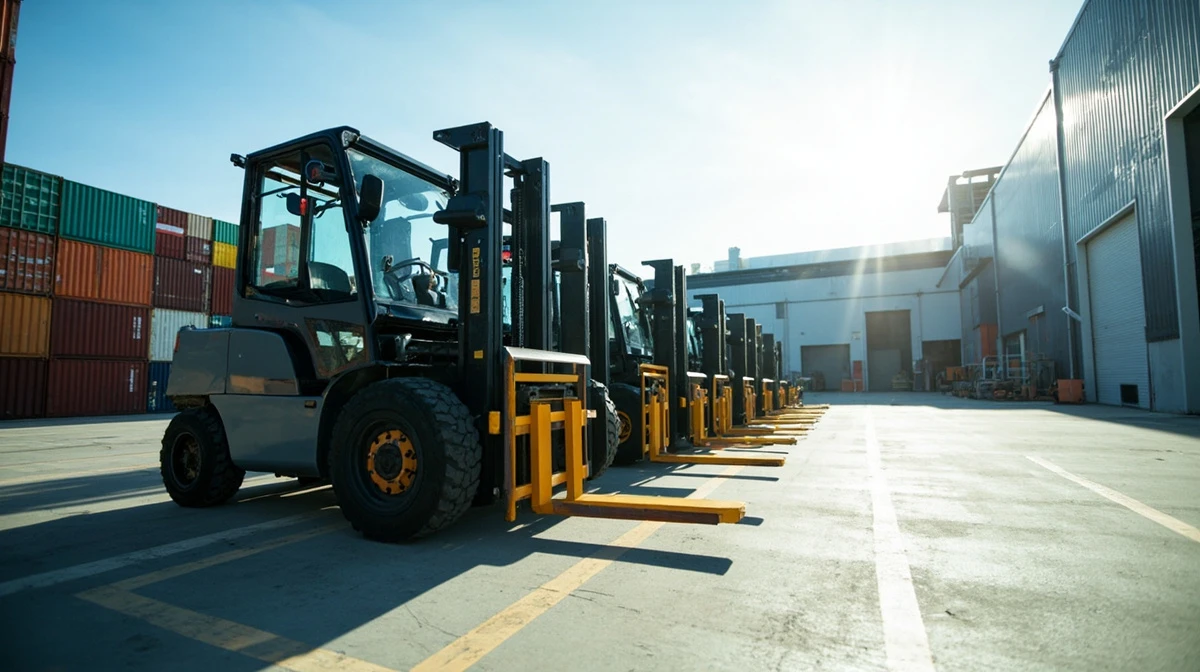
If your loads are heavier than a pallet jack can handle, or you need to lift above floor level, step up to a counterbalance truck. Impetus builds diesel, lithium electric and LPG forklifts from 1.5 t to 12 t; the full range is listed in the Impetus forklift & equipment catalog.
Manual vs electric pallet trucks: how to choose
The choice usually comes down to distance, frequency and load. A manual pallet jack is the right answer for short moves on smooth concrete at low volume. An electric pallet jack is the right answer when the same operator is moving dozens of pallets per shift, or when travel distances run beyond a few dozen metres.
Three practical rules of thumb:
- Under roughly 20–30 m per move, low volume: manual pallet jack.
- Long aisles, trailer loading, repeated cycles: electric pallet jack with drive motor.
- Ramps, dock plates or uneven floors: powered drive is strongly preferred for control and braking.
What the electric version adds
An electric pallet jack, sometimes written as an electrical pallet jack or electric pallet truck, uses a battery-powered drive motor to pull the load and an electric pump to raise the forks. The operator steers and controls speed, but does not supply the traction force. That reduces fatigue and, in most operations, increases throughput per operator per shift.
A battery pallet jack also changes your maintenance profile. You add battery care, charger management and electrical diagnostics, but you remove much of the hydraulic wear that comes from constant manual pumping.
Sizing a pallet jack: the numbers that matter
Most "it won't fit" and "it won't lift" problems are solved before purchase by measuring four things: pallet entry width, fork length, load weight and floor condition.
| What you are handling | What to check | Why it matters |
|---|---|---|
| Standard pallets, general goods | Fork length and fork width against the pallet entry | Forks must enter cleanly without spreading the pallet |
| Heavy or dense loads | Rated capacity versus actual load weight, including packaging | Overloading damages the pump, frame and wheels |
| Closed or euro-style pallets | Fork width and entry clearance | Prevents jamming and pallet damage |
| Cold store or damp areas | Seal and lubrication specification | Affects hydraulic reliability over time |
| Ramps and dock plates | Braking and drive type | Manual units are hard to control on gradients |
Capacity ratings on pallet trucks are usually stated for a specific load centre and a level floor. Treat the rating as a ceiling, not a target. If your loads sit close to the limit, size up.
For operations where pallets must also be lifted to height, a reach truck or electric forklift is the correct pairing. Impetus lithium reach trucks such as the R15 and R20-45C cover 1500–3000 kg, and the FB series electric forklifts run from the FB15 at 1500 kg up to the FB100 at 10000 kg. You can compare categories on the product categories page.
Safety and daily checks
Pallet jack incidents are rarely dramatic, but they are common: crushed feet, trapped hands, pallets dropped on the lower leg, and back strain from pulling loads that should have been pushed. A short daily routine prevents most of them.
- Inspect the forks for cracks, bending and debris before the first lift.
- Check the hydraulic system for leaks and confirm the pump holds a load without drifting down.
- Test the lowering control and confirm it returns to neutral.
- Check wheels and rollers for flat spots, binding or foreign material.
- On electric units, verify battery charge, charger condition and the emergency stop.
During use, keep feet clear of the fork path, travel with the load low, and push rather than pull wherever the layout allows. On gradients, always use a powered unit and travel at controlled speed. Nobody should ride on a pallet jack, and loads should never be raised while the truck is moving.
Buying, price and customisation
Buyers searching for a cheap electric pallet jack usually mean "lowest total cost", not "lowest invoice". A cheap unit that fails in six months costs more than a mid-priced unit that runs for years, especially once downtime and replacement labour are counted. When comparing quotes, ask for the same information from every supplier: rated capacity, fork dimensions, wheel type, battery and charger specification, and spare parts availability.
If you are looking for a crown pallet jack for sale or a crown pallet jack price, note that brand-name pricing reflects distribution and support networks as much as hardware. For export buyers, a factory-direct supplier with in-house manufacturing and a documented spare parts list is often the more practical route — particularly when you need a custom pallet jack with non-standard fork length, width or finish.
Customisation is more common than most buyers expect. Fork length, fork width, wheel material, paint colour, branding and load-specific reinforcement can all be specified at the factory. The key is to provide drawings or measured samples rather than descriptions.
For fleet planning, it also helps to look at the wider equipment mix. Many operations pair pallet trucks with lithium electric forklifts such as the FB20 or FB30 for indoor work, and diesel trucks such as the FD25 or FD30 for yard and loading bay duty. Impetus has manufactured material handling equipment for global export for over 20 years, and the company publishes technical updates and buying guides in its news & guides section.
Frequently asked questions
What is the difference between a pallet jack and a forklift?
A pallet jack is a low-lift truck: it raises a pallet a few centimetres off the floor and moves it horizontally. A forklift has a mast and can lift loads to height for stacking and racking. Pallet jacks are cheaper, lighter and better suited to tight aisles; forklifts are needed whenever a load must go up.
Is an electric pallet jack worth it over a manual one?
It depends on volume and distance. If an operator moves only a few pallets a day over short distances on smooth concrete, a manual pallet jack is sufficient and cheaper to own. If the same person is moving pallets all shift, travelling long aisles, or loading trailers, an electric pallet jack reduces fatigue and usually increases throughput enough to justify the higher purchase price and battery maintenance.
How do I choose the right capacity and fork size?
Measure the pallet entry width and the fork pocket length first, then weigh a typical loaded pallet including packaging. Choose a truck whose rated capacity comfortably exceeds that weight, and whose fork dimensions match the pallets you actually use. If loads sit close to the rated limit, or the floor is uneven, size up rather than matching the rating exactly.
Next step
Whether you need a single manual pallet truck for a workshop or a fleet of electric pallet jacks for a distribution centre, the specification matters more than the badge on the side. Send Impetus your pallet dimensions, load weights and floor conditions, and the team will recommend the right configuration — including custom fork sizes and export packaging. Contact Impetus for a quote and get a specification-based proposal rather than a generic price list.