
Material Handling Equipment: A B2B Buyer's Guide for Warehouse Operations
Material handling equipment guide from a China manufacturer: forklift types, capacities, selection steps, and factory-direct sourcing for warehouses worldwide.
Material handling equipment covers every machine that moves, lifts, positions, stores or protects goods inside a facility — from a hand pallet truck to a 12-ton diesel forklift. For warehouse and plant managers, the buying decision is rarely about a single machine. It is about matching load weights, aisle dimensions, shift patterns and energy infrastructure to a fleet that keeps throughput predictable for the next five to ten years. This guide breaks the category down the way a technical buyer actually evaluates it, and explains how working directly with a China material handling equipment manufacturer changes the cost and customization equation.
What Counts as Material Handling Equipment
The industry generally groups material handling equipment into four functional families. Most warehouses use at least three of them, and the boundaries between categories matter because they determine which supplier you buy from and how the equipment is serviced.
- Transport equipment — moves loads horizontally or vertically: forklifts, reach trucks, pallet jacks, tow tractors, conveyors.
- Positioning equipment — orients a load for the next operation: lift tables, manipulators, jib cranes, rotating forks.
- Unit load formation equipment — stabilizes goods into a single handled unit: pallets, slip sheets, stretch wrappers, strapping machines.
- Storage equipment — holds inventory between movements: racking, shelving, mezzanines, automated storage and retrieval systems.
Powered industrial trucks sit at the center of most warehouse budgets because they appear in all four workflows. That is why forklift selection — capacity, mast height, power source — drives the rest of the specification.
Forklift Classes by Power Source: Where Each One Fits
Once you know your load weights and operating environment, the power source decision usually narrows the field quickly. Each option below is a real trade-off, not a ranking.
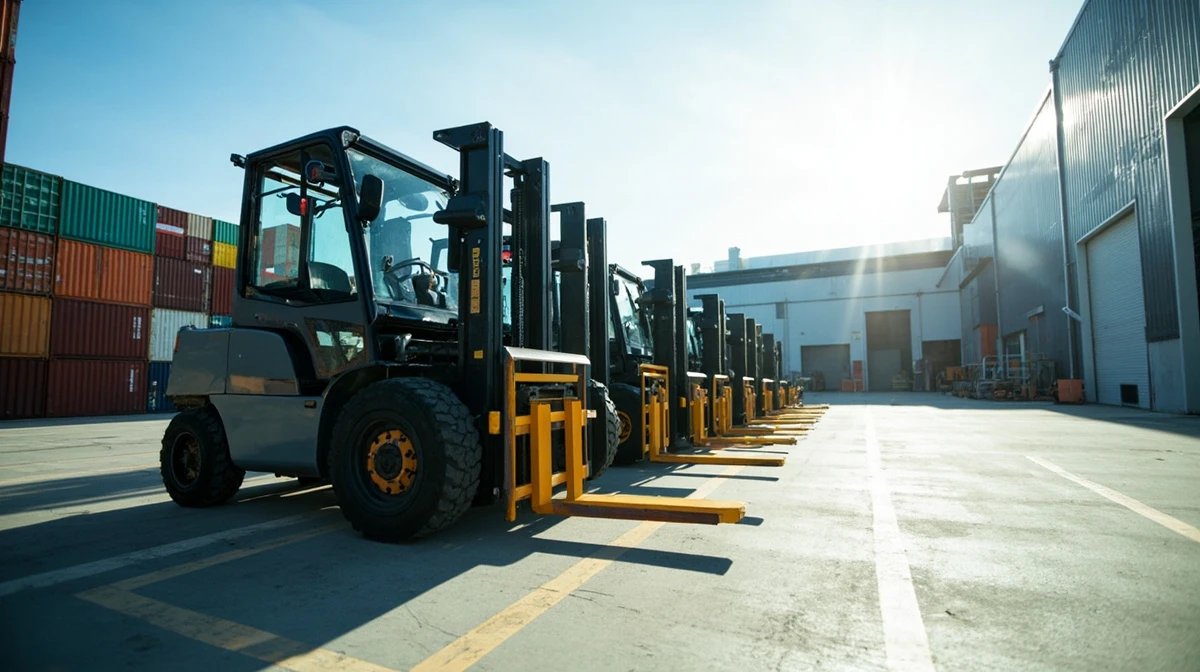
Diesel forklifts — outdoor and heavy-duty cycles
Diesel remains the default for yards, loading docks and high-hour operations. Impetus builds the FD series from 2 tons to 12 tons (FD20 through FD120C), all with 3000 mm standard lift height and a chassis designed for continuous duty. If your loads run above 5 tons or your surface is uneven, diesel is typically the most economical per operating hour.
Lithium electric forklifts — indoor, multi-shift, low maintenance
Lithium-powered electric trucks have moved well beyond light duty. The FB series covers 1.5 tons to 10 tons (FB15 to FB100), with 3000 mm lift height across the range. Lithium packs accept opportunity charging, which means no battery room, no watering, and no swap at shift change — a decisive advantage for food, pharmaceutical and electronics warehouses where emissions and particulate matter are controlled.
Reach trucks — narrow aisle storage
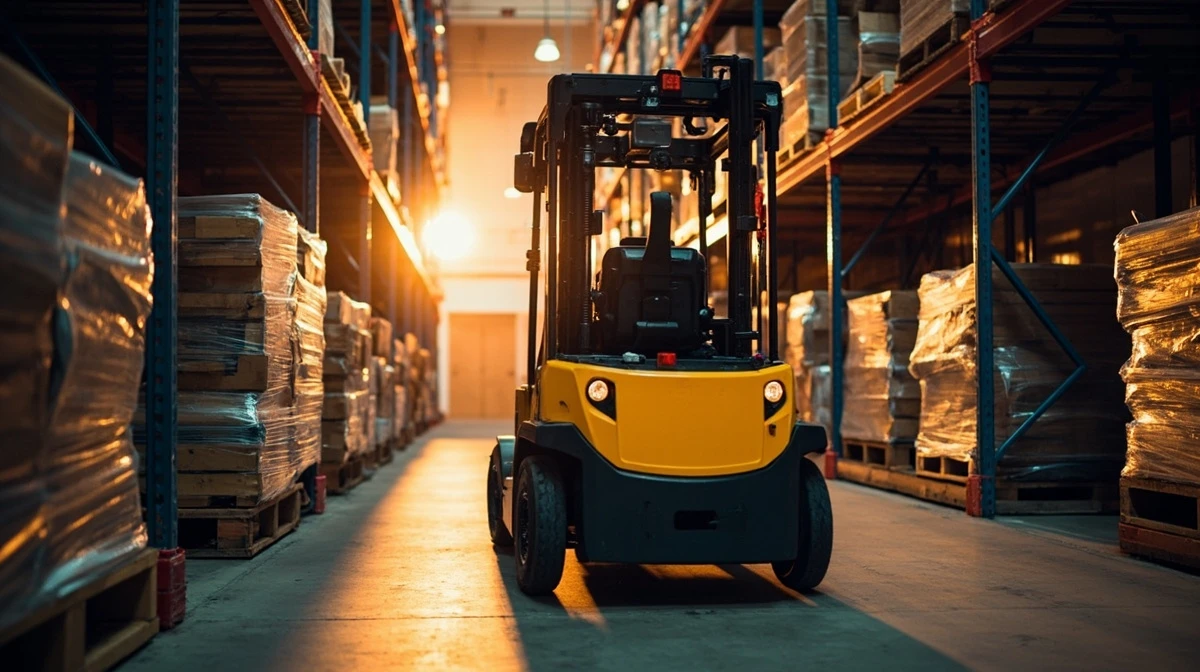
When racking density matters more than raw capacity, reach trucks take over. The R15 and R20-45C models handle 1500–3000 kg with 2180 mm lift, and the YF-Reach is available in stand and seat configurations. These are the machines that let you add racking rows without expanding the building.
LPG and off-road units — specialized environments
LPG forklifts (FG15 to FG40) suit operations that need indoor air quality with fast refueling. Off-road RT models (RT25 to RT40, 2WD and 4WD) handle construction sites, lumber yards and port areas where surface conditions would destroy a standard warehouse tire.
Specification Snapshot: Matching Capacity to Application
The table below maps representative Impetus models to typical duty. Use it as a starting filter, then confirm with a technical review of your load chart and aisle plan.
| Equipment type | Representative models | Capacity range | Standard lift height | Typical application |
|---|---|---|---|---|
| Diesel forklift | FD20 – FD120C | 2000 – 12000 kg | 3000 mm | Yards, docks, heavy manufacturing |
| Electric (lithium) forklift | FB15 – FB100 | 1500 – 10000 kg | 3000 mm | Indoor warehousing, multi-shift, clean environments |
| Reach truck | R15, R20-45C, YF-Reach | 1500 – 3000 kg | 2180 mm | Narrow-aisle racking, high-density storage |
| LPG / gasoline forklift | FG15 – FG40 | 1500 – 4000 kg | 3000 mm | Indoor/outdoor mixed duty, fast refueling |
| Off-road forklift | RT25 – RT40 | 2500 – 4000 kg | 3000 mm | Construction, lumber, ports (2WD/4WD) |
Note that capacity is rated at a given load center. A truck rated at 3000 kg may handle less once you add a long attachment or a high mast. Always specify the actual load, its dimensions and the lift height required — not just the tonnage.
How to Select Material Handling Equipment for Your Facility
Buyers who get this wrong usually skip one of the following steps. Work through them in order and the shortlist builds itself.
- Map the load. Record maximum weight, load dimensions, load center and whether loads are palletized, drummed or irregular.
- Measure the space. Aisle width, door clearances, racking beam heights and floor loading limits determine whether a counterbalance truck or a reach truck is even viable.
- Define the duty cycle. Hours per shift, shifts per day and peak-season surges decide between diesel, lithium and LPG far more reliably than purchase price alone.
- Check the environment. Indoor air quality rules, cold storage, explosive atmospheres and outdoor surfaces all constrain the power source.
- Plan the service model. Confirm parts availability, lead times and whether the supplier supports local service partners in your country.
Sourcing from a China Material Handling Equipment Manufacturer
China now supplies a large share of the world's powered industrial trucks, and the practical question for importers is not whether to source there but how to source well. Working with an established exporter rather than a trading intermediary changes three things: specification control, unit cost and after-sales response.
Impetus has manufactured forklifts, warehouse equipment, construction machinery and forklift attachments in Xiamen for over 20 years, exporting to more than 150 countries. That volume matters for custom material handling equipment — non-standard mast heights, attachment interfaces, paint and branding, or configurations matched to a specific racking layout. A factory that builds its own chassis can accommodate those requests; a reseller generally cannot.
For buyers comparing material handling equipment for sale across several suppliers, the checklist below is a fast way to separate factories from middlemen:
- Can they quote a specific model number and confirm its rated capacity in writing?
- Do they offer both diesel and lithium platforms, or only one?
- Will they supply a load chart and dimensional drawing before order?
- Is there a documented spare parts list and lead time?
- Can they reference existing customers in your region or industry?
You can review the full Impetus forklift & equipment catalog or browse all product categories to see how the ranges are organized. For background on fleet planning and maintenance, the Impetus news & guides section covers application-level topics in more depth.
Frequently Asked Questions
What is the difference between material handling equipment and warehouse equipment?
Material handling equipment is the broader term — it includes transport, positioning, unit load formation and storage equipment used across manufacturing, distribution and disposal. Warehouse equipment is effectively the subset deployed inside a storage facility: racking, pallet trucks, reach trucks and counterbalance forklifts. In practice the two overlap heavily, since most material handling purchases are made for warehouse operations.
How do I choose between a diesel and a lithium electric forklift?
Start with the operating environment and duty cycle. Diesel suits outdoor yards, uneven surfaces and continuous high-hour use, and is available from 2 tons to 12 tons in the FD series. Lithium electric trucks suit indoor operations with air-quality or noise constraints and multi-shift schedules, since opportunity charging removes battery swapping. The FB series covers 1.5 tons to 10 tons. If your work is split between indoor and outdoor, LPG (FG15–FG40) is often the compromise.
Can I order custom material handling equipment from a China factory?
Yes, and it is one of the main reasons buyers source directly. Customization typically covers mast height and type, fork dimensions, attachment interfaces, capacity ratings within an existing platform, paint and branding, and documentation requirements. Because Impetus manufactures its own chassis and exports to more than 150 countries, non-standard configurations can be quoted against a specific model number rather than described generically.
Next Step
Send us your load weights, aisle dimensions, lift heights and shift pattern, and we will return a model recommendation with capacity confirmation, dimensional drawings and a factory-direct quotation. Contact Impetus for a quote and put your specification in front of the people who build the machines.