
Hand Operated Pallet Truck: B2B Buyer's Guide & Specs
Hand operated pallet truck buying guide: capacity, fork size, wheels and hydraulic design explained, plus how to source from a hand pallet truck manufacturer.
A hand operated pallet truck is the lowest-cost way to move a loaded pallet across a warehouse floor, and it is still the most common piece of material handling equipment in the world. There is no battery, no motor and no control system to fail — just a hydraulic pump, a pair of forks and a steering handle. That simplicity is exactly why procurement teams keep buying them in volume, and why the specification details matter more than the brand badge on the chassis.
This guide covers what actually differs between models, how to size a hand pallet truck to your loads and racking, and what to verify when you buy from a hand pallet truck manufacturer overseas. If you are comparing this against powered equipment, the Impetus forklift & equipment catalog shows where manual trucks stop and forklifts begin.
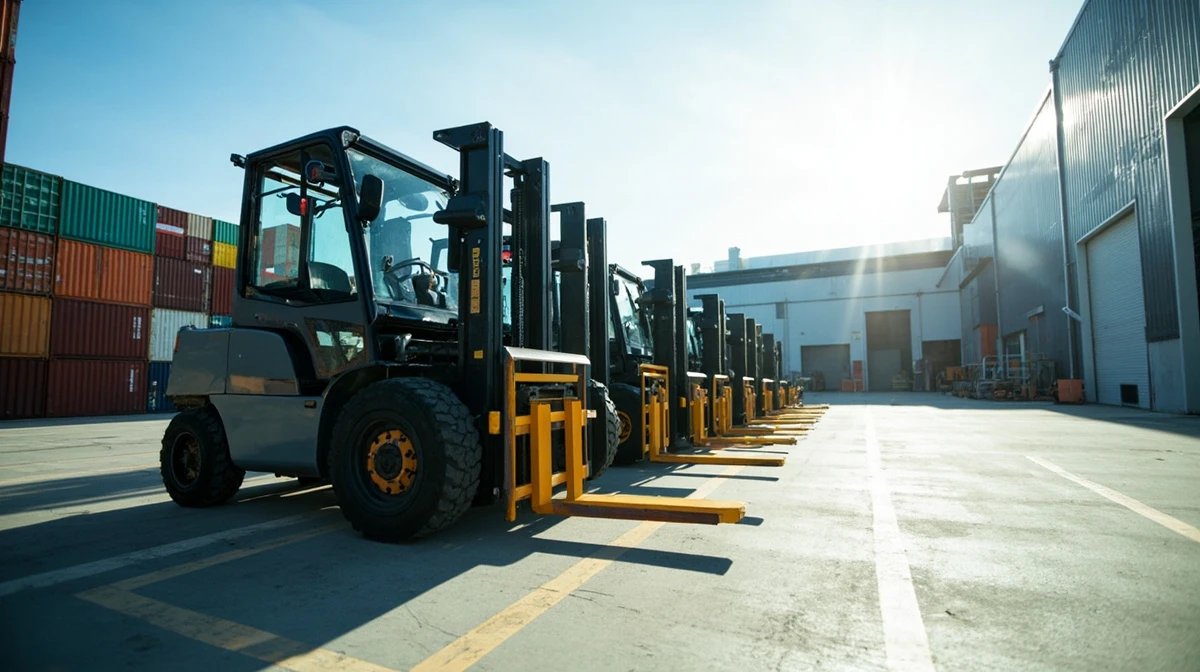
What a hand operated pallet truck actually does
A hand pallet truck lifts a pallet a few centimetres off the floor, rolls it to a new position, and sets it down. The lift comes from a hydraulic pump driven by the handle — you pump the tiller two or three times, the forks rise, and a release lever lowers them under load control.
That is the entire machine. Because there is no power unit, the practical limits are set by four things:
- Hydraulic pump quality — determines lift effort, creep-down rate and service life
- Fork dimensions — must match your pallet footprint and entry clearance
- Wheel and roller type — decides rolling resistance and floor compatibility
- Chassis and fork steel — sets the real, repeatable load rating
Everything else — paint, handle grip, branding — is cosmetic. Buyers who focus on these four points get trucks that last a decade; buyers who shop on price alone get trucks that leak hydraulic oil within a year.
Capacity: match the truck to the load, not the catalogue
Hand pallet trucks are commonly sold in 2,000 kg, 2,500 kg, 3,000 kg and 5,000 kg classes. The number on the plate is the rated capacity at a defined load centre, not a suggestion. Two rules keep you out of trouble:
- Never rate at the maximum. If your heaviest routine pallet is 1,800 kg, a 2,000 kg truck is working at 90% of rating every cycle. Step up to 2,500 kg or 3,000 kg.
- Check the load centre. A pallet whose weight sits far forward of the fork root puts more bending stress on the forks than a compact, evenly stacked load of the same mass.
Overloading shows up first as bent fork tips and a pump that will not hold a raised load. Both are fatigue failures, and both are avoidable by sizing honestly.
Fork size, wheels and the details that decide fit
Fork length and width
Forks must be long enough to carry the full pallet deck and narrow enough to enter the pallet pockets. Standard warehouse pallets in Europe and Asia generally suit a fork length in the 1,150 mm range, while wider block pallets used in North America need longer, wider forks. Measure a loaded pallet, not an empty one — a bulging or overhanging load changes the effective width.
Wheel and roller combinations
The steer wheels under the handle and the load rollers at the fork tips are usually specified separately:
- Nylon / polyurethane — low rolling resistance, best on smooth concrete, quiet in operation
- Rubber — quieter and more forgiving on cracked or uneven floors, but higher push effort
- Steel — for harsh environments and high temperatures, but hard on floors and noisy
A common warehouse compromise is polyurethane steer wheels with tandem nylon load rollers, which spreads the load and eases entry into pallets.
Hydraulic and handle design
Look for a pump with a hardened ram, a proper seal kit and a three-position handle: raise, neutral/drive, lower. A neutral position matters more than most buyers realise — it lets an operator pull a loaded truck without pumping, which reduces fatigue over a shift.
Hand pallet truck specification comparison
The table below maps typical specification decisions to the operating conditions that drive them. Use it as a checklist when you request quotations from a hand pallet truck supplier.
| Specification | Light duty | Standard warehouse | Heavy duty |
|---|---|---|---|
| Typical rated capacity | 2,000 kg | 2,500–3,000 kg | 5,000 kg |
| Fork length | Short, retail pallets | Standard 1,150 mm class | Long forks, wide pallets |
| Steer wheels | Nylon | Polyurethane | Steel or heavy polyurethane |
| Load rollers | Single nylon | Tandem nylon | Tandem steel or heavy-duty |
| Typical use | Retail, light picking | General warehousing, loading bays | Manufacturing, heavy palletised goods |
| Service priority | Low cost, easy replacement | Balanced life and push effort | Fork strength and pump durability |
If your operation also moves pallets onto trucks, into racking or across rough yards, a manual truck is the wrong tool for that leg of the journey. The full Impetus product categories page shows the powered alternatives, from electric reach trucks to diesel forklifts, that take over where manual handling ends.
What hand pallet truck price actually reflects
Quoted prices for the same nominal capacity can differ by a factor of two or more. The gap is rarely margin — it is material and process:
- Fork steel thickness and grade — thinner sections flex and eventually crack
- Pump sealing quality — the single biggest driver of warranty claims
- Wheel bearings — sealed bearings versus plain bushings change push effort dramatically
- Welding and paint preparation — determines corrosion resistance in humid or coastal warehouses
- Quality control at the factory — load testing and pump cycling before shipment
A realistic approach is to request a sample unit, cycle it under your own loads for a month, and then place the volume order. Any credible hand pallet truck manufacturer will support that, because the cost of a failed container is far higher than the cost of one sample.
Buying from a manufacturer versus a reseller
Working directly with a hand pallet truck manufacturer usually gives you three advantages: specification flexibility (fork length, wheel type, colour, branding), consistent batch-to-batch quality, and spare parts availability years after purchase. Resellers add convenience and local stock, but they rarely control the build.
When evaluating a supplier, ask for the load test procedure, the seal supplier, the spare parts list with part numbers, and the lead time for a repeat order. Suppliers who answer these questions quickly are the ones who will still be answering the phone in three years.
Impetus has supplied forklifts, warehouse equipment and attachments to buyers in more than 150 countries for over two decades. You can review the wider range in the product catalog or read practical buying notes on the Impetus news & guides page.
FAQ: hand operated pallet truck questions
What is the difference between a hand pallet truck and a pallet jack?
They are the same machine. "Pallet jack" is the common North American term, while "hand pallet truck" and "hand operated pallet truck" are used more widely in Europe, Asia and export documentation. Capacity, forks and hydraulics work identically.
How much weight can a hand operated pallet truck lift?
Standard models are rated at 2,000 kg, 2,500 kg or 3,000 kg, with heavy-duty versions rated at 5,000 kg. The rating applies at a defined load centre, so choose a capacity comfortably above your heaviest routine pallet rather than matching it exactly.
How do I choose between nylon, polyurethane and rubber wheels?
Match the wheel to the floor. Polyurethane and nylon roll easily on smooth concrete and are the usual warehouse choice; rubber is quieter and more forgiving on cracked or uneven floors but needs more push effort; steel wheels suit harsh environments and high temperatures at the cost of floor wear and noise.
Next step
Tell us your pallet dimensions, heaviest routine load and floor type, and we will recommend the right fork length, wheel combination and capacity class — then quote it with spare parts and lead times included. Contact Impetus for a quote and we will come back with a specification you can compare line by line.