
Forklift Buying Guide: Counterbalance, AGV, 4x4 & Articulated
A practical forklift buying guide: counterbalance, 4x4, AGV and articulated trucks, capacities from 1.5 to 12 tons, plus 10k forklift price factors.
A forklift is a powered industrial truck built to lift, carry and stack loads over short distances — typically on pallets, in warehouses, yards, ports and construction sites. The word covers a wide family of machines: counterbalance trucks, reach trucks, off-road 4x4 units, articulated models and increasingly AGV forklifts that move without an operator. Choosing well comes down to four variables: load weight, lift height, ground conditions and how many hours a day the truck must run. Get those right and the rest of the specification falls into place.
This guide walks through the main forklift categories, the power sources behind them, the capacity ranges available, and the cost factors that drive a 10k forklift price or an AGV forklift quote. It is written for buyers who need a machine that works, not a brochure.
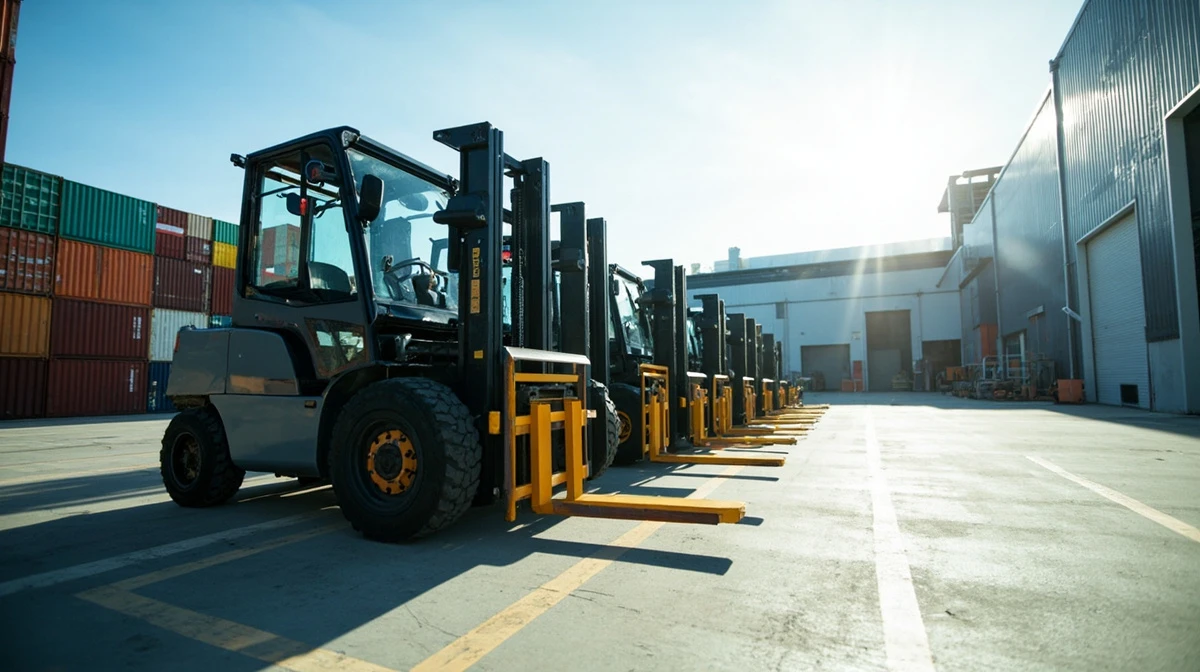
What a forklift actually is — and what it is not
A forklift truck, also called a lift truck or industrial truck, combines three systems: a chassis with a counterweight or stabilising base, a mast that raises and lowers a carriage, and forks that slide under the load. The counterweight principle is simple physics — the weight behind the front axle offsets the load on the forks, which is why a truck can weigh several times more than the load it lifts.
What a forklift is not: a crane, a telehandler or a wheel loader. It does not travel long distances at speed, it does not lift loads above its rated capacity at a given load centre, and it should not be used on gradients or surfaces beyond its design. Understanding those limits is the first step in specifying the right machine.
Counterbalance forklifts: the default choice
Counterbalance trucks are the most common forklift type in the world. The forks sit at the front, the counterweight at the rear, and the operator sits or stands inside the chassis. They can pick up a load from the floor, travel with it, and stack it at height — a versatility that reach trucks and specialised equipment cannot match.
Impetus builds counterbalance trucks across three power families:
- Diesel — FD series from FD20 (2000 kg) through FD50, FD60, FD70, FD80, FD100 up to FD120C (12000 kg). Best for outdoor yards, heavy loads and continuous shifts.
- Electric / lithium — FB series from FB15 (1500 kg) to FB100 (10000 kg), plus R15 and R20-45C reach trucks for narrow-aisle work. Suited to indoor warehouses where emissions and noise matter.
- LPG / gasoline — FG series from FG15 (1500 kg) to FG40 (4000 kg). A middle ground for mixed indoor-outdoor operations where refuelling speed is useful.
All of these are counterbalance forklifts in the classic sense. The choice between them is driven by environment and duty cycle, not by brand preference.
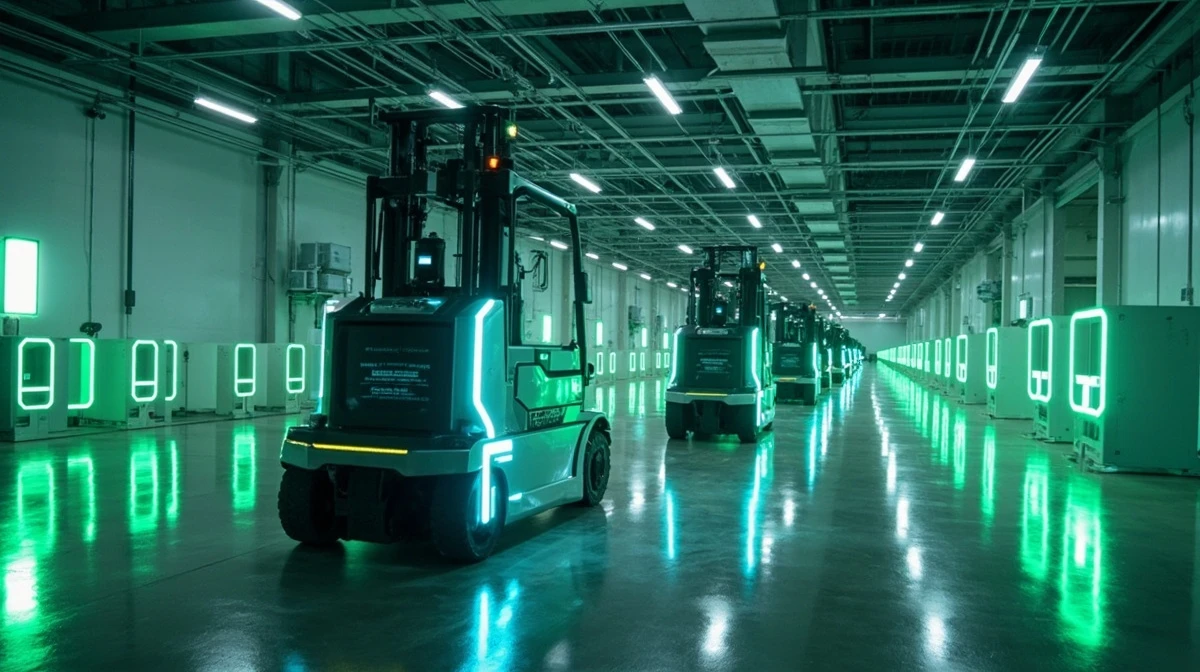
Power source: the decision that shapes everything else
Buyers often start with capacity, but power source usually decides the rest of the specification. The table below compares the three main options as they appear in the Impetus range.
| Power source | Typical models | Capacity range | Best environment |
|---|---|---|---|
| Diesel | FD20 – FD120C | 2000 – 12000 kg | Outdoor yards, ports, construction, heavy continuous duty |
| Electric / lithium | FB15 – FB100, R15, R20-45C | 1500 – 10000 kg | Indoor warehouses, cold stores, food and pharma, narrow aisles |
| LPG / gasoline | FG15 – FG40 | 1500 – 4000 kg | Mixed indoor-outdoor, fast refuelling, moderate loads |
Two practical rules apply. First, if the truck works indoors more than half the time, electric is usually the right answer — lithium packs remove the battery-room overhead that older lead-acid fleets required. Second, if the truck works outdoors on uneven ground with loads above 5 tonnes, diesel remains the most cost-effective option per hour of operation.
4x4 and off-road forklifts for rough ground
Standard counterbalance trucks are designed for prepared surfaces. On gravel, mud, sand or construction sites, a 4wd forklift or 4x4 forklift is the correct tool. Off-road models use larger tyres, higher ground clearance and — in 4WD configuration — drive to all four wheels, which keeps traction when the surface is soft or wet.
Impetus off-road trucks include the RT25 (2500 kg), RT30 (3000 kg), RT35 (3500 kg) and RT40 (4000 kg), available in 2WD or 4WD with diesel power and a 3000 mm lift height. A 4x4 forklift for sale in this class is typically specified for construction yards, mining support, agriculture and port logistics where a standard truck would bog down.
When specifying a 4x4 forklift, check three things beyond capacity: tyre type (pneumatic versus solid), mast stage (two-stage for standard stacking, three-stage for high or low-level work), and whether the machine needs to be road-registered or transported between sites.
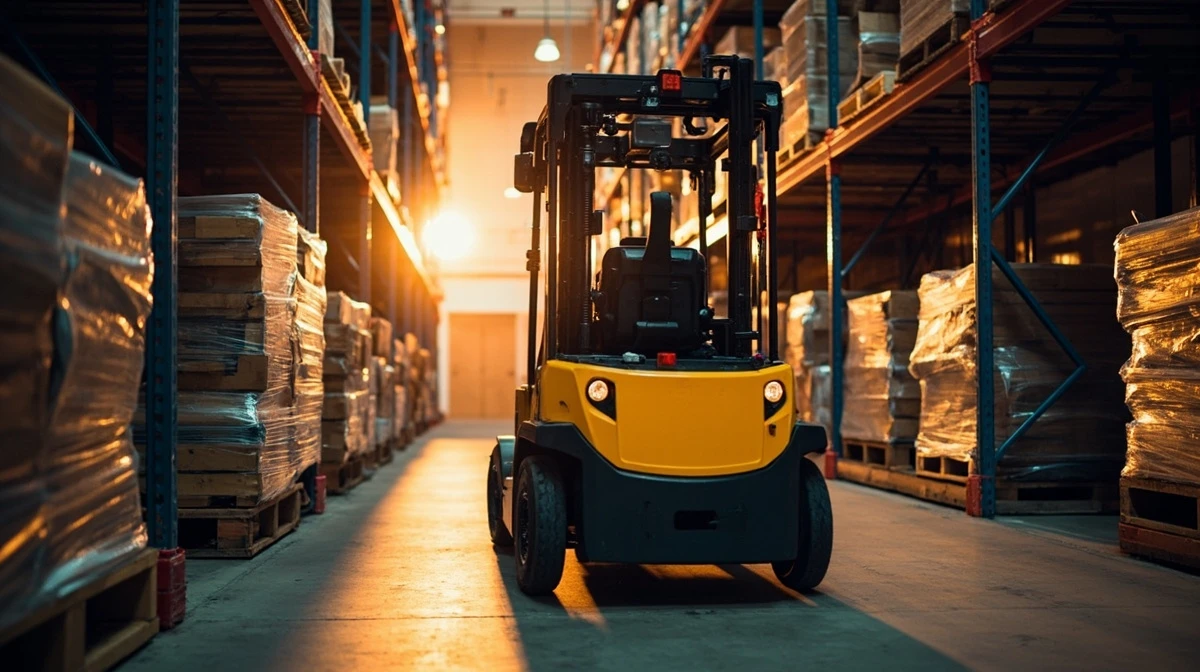
Articulated forklifts and AGV forklifts: two specialist directions
Articulated forklifts
An articulated forklift steers by pivoting the mast and fork assembly relative to the chassis, rather than turning the whole truck. The result is a machine that can work in aisles far narrower than a counterbalance truck requires, while still picking loads from the floor and stacking at height. An articulated forklift for sale is usually bought by operations that need counterbalance-style flexibility but cannot afford the aisle width a standard truck demands.
AGV forklifts
An AGV forklift is an automated guided vehicle — a forklift chassis with navigation, sensors and a control system that lets it move pallets without a driver. These are deployed where repetitive, high-frequency pallet movement justifies the capital cost: large distribution centres, 24-hour manufacturing lines and cold stores where operator time is expensive.
AGV forklift cost and AGV forklift price are driven less by the truck itself and more by the navigation system, safety scanners, fleet management software and the site survey required to map routes. A single AGV forklift can cost several times a comparable manual truck, so the payback case rests on labour hours saved and consistency of throughput, not on the machine alone.
What drives a 10k forklift price
A 10k forklift — a 10-tonne capacity truck such as the FD100 or FB100 — sits in the heavy end of the counterbalance range. Price is influenced by several factors that buyers should compare line by line:
- Power source — diesel FD100 versus lithium FB100 changes the drivetrain, battery and charging infrastructure cost.
- Mast configuration — lift height, stage count and whether a side-shifter or fork positioner is fitted.
- Tyres and axles — pneumatic tyres and heavier axles for outdoor use add cost but extend service life.
- Attachments — clamps, rotators, bale handlers and other forklift attachments change the carriage and hydraulic specification.
- Certification and destination — emissions standards, documentation and shipping terms for the destination country.
The same logic applies at every capacity level. A 10k forklift price quoted without mast, tyre and attachment detail is not comparable to another quote. Ask for a full specification sheet before comparing numbers.
FAQ
What is the difference between a forklift and a forklift truck?
They are the same machine. "Forklift", "forklift truck", "lift truck" and "industrial truck" are interchangeable terms for a powered truck with forks for lifting and moving palletised loads over short distances.
How much does a 10k forklift cost?
A 10-tonne forklift price depends on power source, mast configuration, tyres, attachments and destination. Diesel FD100 and lithium FB100 models are specified differently, so buyers should request a full quotation with the mast, tyre and attachment details included rather than comparing headline figures.
When should I choose a 4x4 forklift instead of a standard counterbalance truck?
Choose a 4wd or 4x4 forklift when the working surface is unpaved, uneven or frequently wet — construction sites, gravel yards, farms and ports. On smooth concrete, a standard counterbalance truck is more efficient and less expensive to run.
Next step
Specifying a forklift is a sequence: define the load, the lift height, the surface and the duty cycle, then match capacity and power source to those answers. Impetus has manufactured counterbalance, reach, off-road and specialised trucks for more than 20 years and exports to over 150 countries. Browse the Impetus forklift & equipment catalog to see the full range, review all product categories for attachments and warehouse equipment, or contact Impetus for a quote with your load and site details — we will come back with a specification, not a generic price list.