
Fork Twilight: Matching Forklift Forks to Your Truck
Fork twilight explained: how to match fork length, section and capacity to your diesel, electric or off-road forklift, plus a spec table and buying checklist.
Fork twilight is the operating point where a forklift's fork capacity, load centre and truck stability all meet — the moment when a load is either carried safely or the truck tips forward. In most fleets, forks are treated as a permanent fixture of the truck. In reality, they are a wear item and a specification item, and getting them wrong is one of the most common causes of reduced capacity, damaged pallets and unstable loads. This guide explains how fork twilight works in practice, how to match forks to diesel, electric and off-road trucks, and what to check before you order a replacement set.
What fork twilight actually means in the warehouse
The term describes the transition point in a lift cycle: the forks have entered the pallet, the load has settled, and the truck is about to lift. Up to that point the forks are carrying almost nothing. After it, every kilogram of the load is transferred through the fork blades, the carriage and the mast. That transfer is where capacity ratings stop being theoretical.
Three variables decide whether the transfer is safe:
- Load weight — the actual mass on the forks, including pallet and packaging.
- Load centre — the horizontal distance from the fork face to the centre of gravity of the load.
- Fork section and length — the blade's ability to resist bending at that distance.
A truck rated at 3000 kg at a 500 mm load centre does not carry 3000 kg at 900 mm. The further the load centre moves out, the lower the safe capacity. Forks follow the same rule: a longer blade of the same section has less remaining capacity than a shorter one.
How to read a fork specification before you buy
Forklift forks are specified by three numbers: length, section (width x thickness) and the carriage class they mount to. The blade's rated capacity is stamped or etched near the heel — the bend where the vertical shank meets the horizontal blade. That rating is valid at a stated load centre, usually 500 mm or 600 mm.
Length
As a working rule, fork length should be about two-thirds of the load depth. Too short and the load sits forward of the heel, increasing the effective load centre. Too long and you lose capacity and risk striking racking or the load behind.
Section
Thickness drives strength; width drives stability. A taller, thinner section resists bending better than a shorter, thicker one of the same weight, which is why heavy-duty forks are deep rather than wide.
Heel wear
The heel is where forks fail. Once the blade thins by roughly 10 percent at the heel, capacity is no longer guaranteed and the fork should be replaced. Measure it during every planned service, not only after an incident.
Matching forks to truck type: diesel, electric and off-road
The right fork depends on the truck and the ground it works on. Impetus builds diesel, lithium electric, LPG and off-road trucks across a wide capacity range, and each family has different fork priorities.
Diesel forklifts
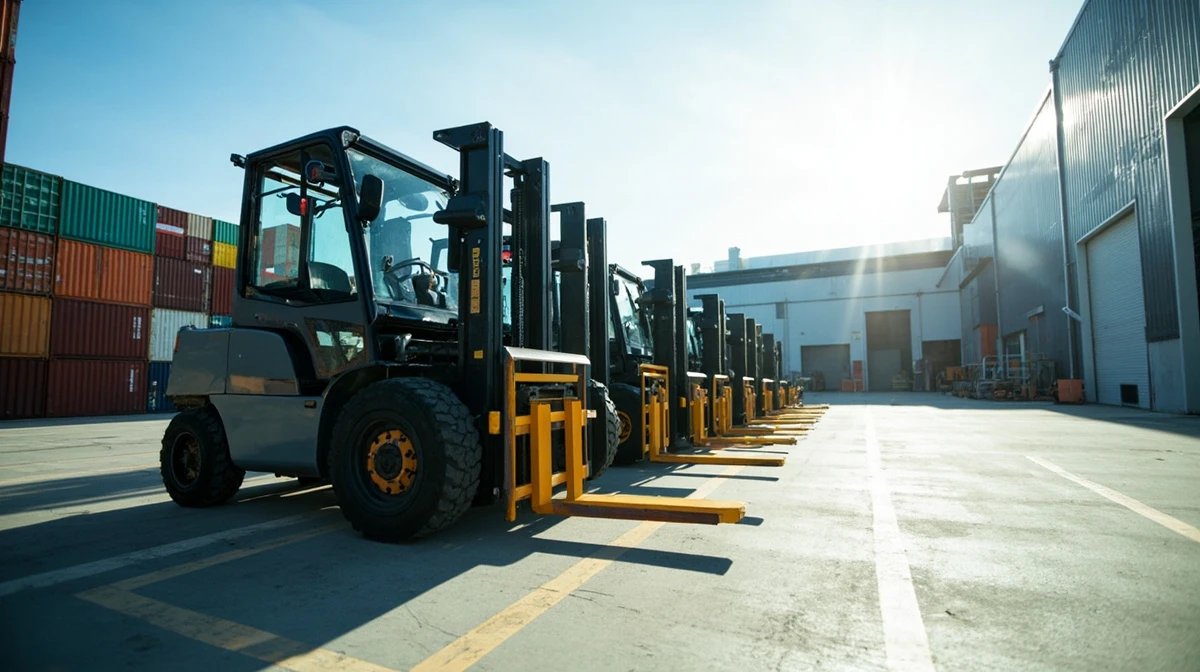
Diesel trucks such as the FD20 (2000 kg), FD30 (3000 kg) and FD50 (5000 kg) are the workhorses of yards, ports and heavy warehousing. They run long shifts on rough surfaces, so forks take more impact at the heel. Specify a heavier section than the minimum and inspect monthly.
Electric forklifts
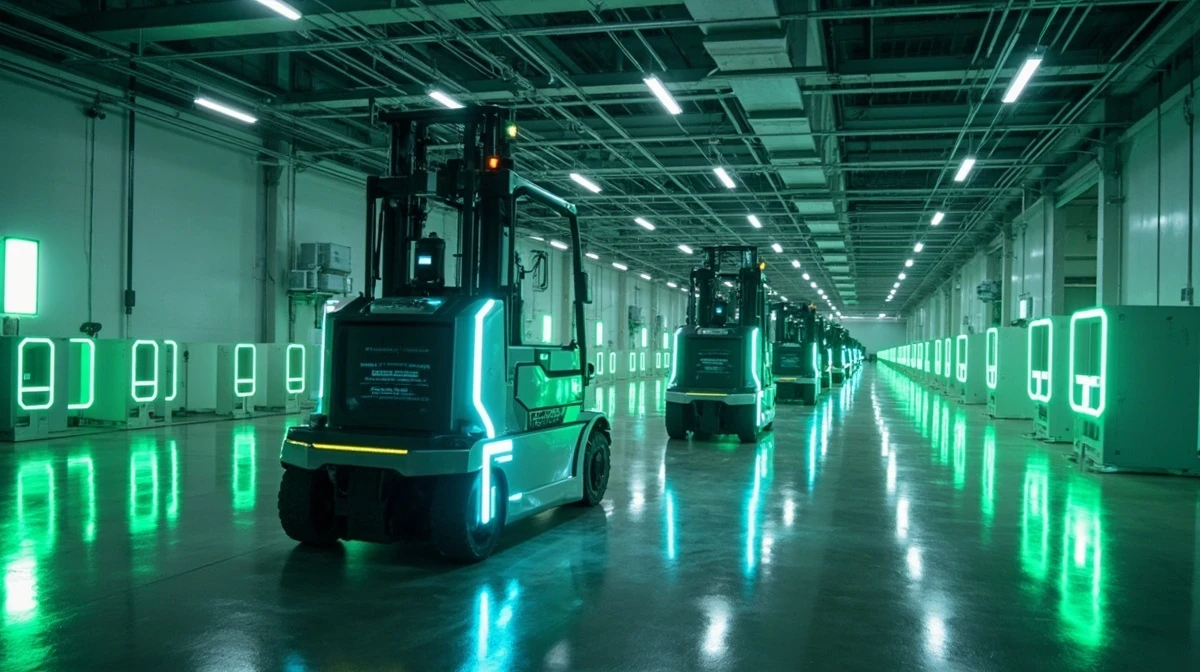
Lithium electric trucks like the FB20 (2000 kg), FB30 (3000 kg) and FB50 (5000 kg) work indoors on smooth floors. Load centres are usually tighter and pallets more uniform, so standard sections in good condition perform well. The main risk is heel wear from repeated high-cycle handling.
Reach trucks and warehouse equipment
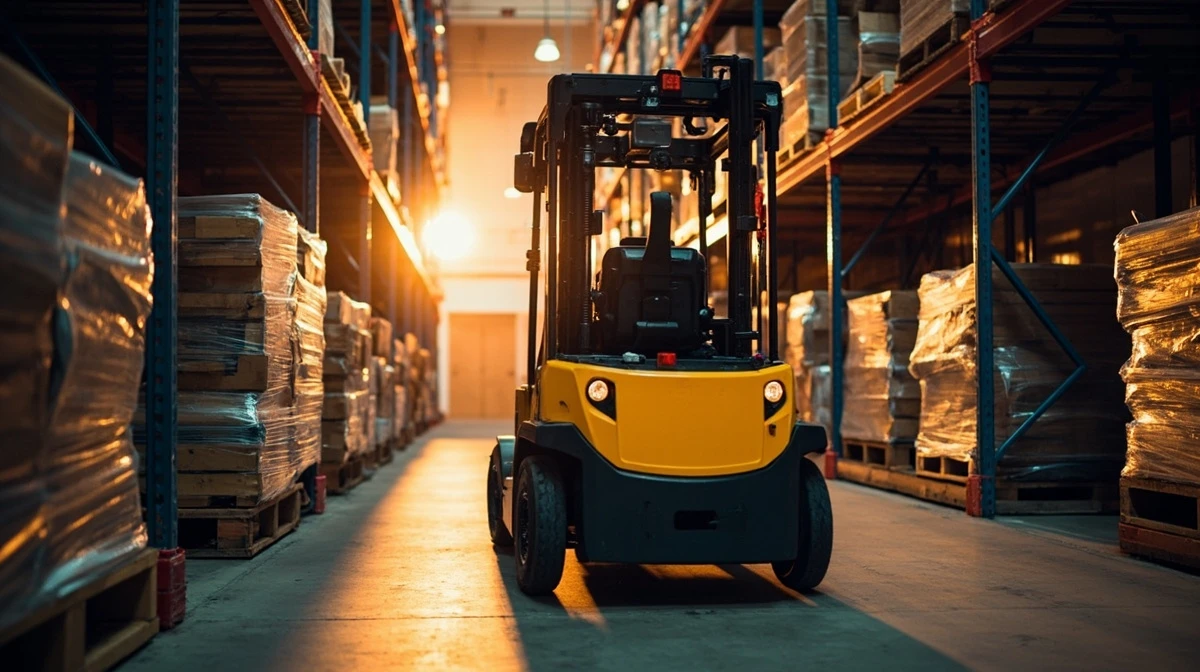
Reach trucks such as the R15 and R20-45C operate in narrow aisles where fork length must match pallet depth precisely. Oversized forks here cause rack strikes and damaged stock, not just lost capacity.
Off-road and construction equipment
Off-road trucks like the RT25 (2500 kg), RT30 (3000 kg) and RT35 (3500 kg) work on gravel, mud and uneven ground. Forks on these machines should be inspected for bending and cracking far more often, because shock loads are routine.
Fork selection reference table
The table below shows typical truck families and the fork considerations that matter most. Always confirm the exact fork rating against the truck's data plate and load chart before ordering.
| Truck family | Example models | Typical capacity | Fork priority |
|---|---|---|---|
| Diesel counterbalance | FD20, FD30, FD50 | 2000–5000 kg | Heavy section, impact-resistant heel |
| Diesel heavy duty | FD80, FD100, FD120C | 8000–12000 kg | Long blades, high load centre tolerance |
| Lithium electric | FB20, FB30, FB50 | 2000–5000 kg | Standard section, tight length match |
| Reach truck | R15, R20-45C | 1500–3000 kg | Precise length for pallet depth |
| LPG / gasoline | FG15, FG25, FG35 | 1500–3500 kg | General purpose, mixed indoor/outdoor |
| Off-road | RT25, RT30, RT35 | 2500–3500 kg | Shock resistance, frequent inspection |
Attachments change the fork twilight point
Every attachment added to the carriage moves the load centre forward and reduces remaining capacity. A side-shifter, a clamp, a rotator or a bale handler all add weight and distance. When you fit an attachment, re-check the truck's load chart and confirm the forks are still rated for the new effective load centre.
Forks themselves are also available in specialised forms — shaft-mounted, block, roll and pallet forks — each designed for a specific handling task. If your application is unusual, describe the load and the cycle to your supplier rather than selecting from a catalogue alone.
Buying checklist for replacement forks
- Record the truck model and rated capacity from the data plate.
- Measure the load depth and set fork length at roughly two-thirds of it.
- Confirm the carriage class and mounting type.
- Check the load centre stated on the existing fork rating.
- Measure heel thickness and compare with the original specification.
- Account for any attachment already fitted.
- Order forks in matched pairs, never singly.
If you are also reviewing the truck itself, our forklift and equipment catalog lists diesel, electric, LPG and off-road models, and the product categories page shows how the ranges are organised. For fleet-level guidance, see the Impetus news and guides section.
FAQ: fork twilight questions we hear most
Can I use longer forks to lift a wider load?
Only if the truck's remaining capacity at the new load centre still covers the load. Longer forks increase the distance to the centre of gravity and reduce safe capacity, so a longer blade is not a free upgrade.
How often should forklift forks be inspected?
Forks should be checked at every planned service and after any incident involving a dropped or shock-loaded pallet. Heel thickness and any cracking near the heel are the two critical checks.
Do electric forklifts need different forks from diesel trucks?
Not fundamentally — fork rating is driven by load weight and load centre, not by power source. In practice, electric trucks work indoors with tighter load centres, so standard sections in good condition are usually sufficient, while diesel and off-road trucks benefit from heavier sections.
If you are specifying forks for a new truck or replacing a worn set, send us the truck model, load weight, load centre and pallet dimensions. Impetus has supplied forklifts, warehouse equipment, construction machinery and attachments to buyers in more than 150 countries for over 20 years. Contact Impetus for a quote and we will confirm the correct fork specification for your application.