
Fork Truck Guide: Types, Capacities and How to Choose
A practical fork truck guide covering counterbalance, reach and off-road types, diesel vs electric power, capacity selection, training cost and dealer checks.
A fork truck is a powered industrial truck built around a mast and fork carriage, used to lift, stack and move palletised loads over short distances. In everyday trade language the same machine is called a lift truck, a forklift, a fork hoist or an industrial truck. The terminology shifts by region and industry, but the engineering is consistent: a counterweighted or stabilised chassis, a lifting mast, and forks that carry the load. This guide explains the main configurations, how power source changes the way you work, how to match capacity to your real loads, and what to check before you commit to a purchase or a training budget.
What a fork truck actually is — and why the name varies
The term "fork truck" describes the machine by its two defining features: the forks that carry the load and the truck chassis that supports them. In ports and heavy industry you will hear "lift truck"; in warehouses and retail distribution, "forklift" dominates. The variation is not cosmetic — it often signals which class of equipment the speaker works with daily.
What matters for specification is the configuration, not the label. A counterbalance fork truck carries the load cantilevered in front of the front axle and uses its own weight at the rear as a counterweight. This is the most versatile layout and the one most buyers picture first. A fork reach truck, by contrast, uses a moving mast or reach carriage so the load can be retracted over the base legs — a design that lets it work in narrower aisles than a counterbalance machine of the same capacity.
Both are powered industrial trucks. Both need trained operators. The difference shows up in aisle width, load centre, floor loading and the type of racking you can serve.
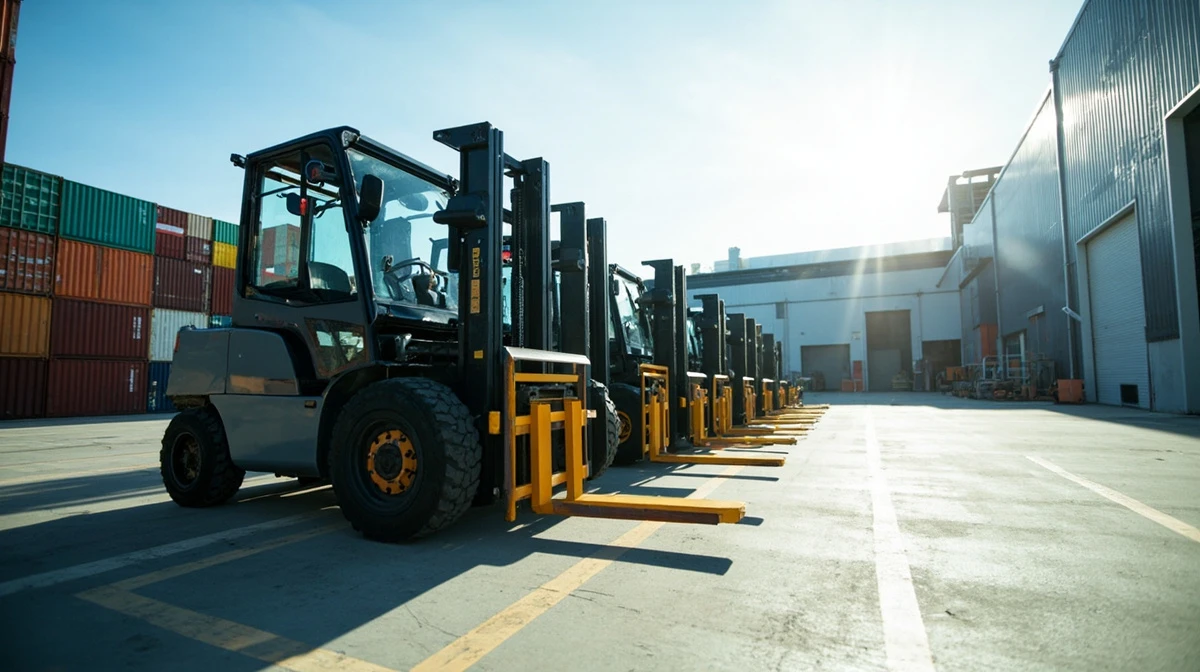
Counterbalance, reach and off-road: matching the truck to the aisle
Choosing between configurations is mostly a question of where the truck will spend its working hours.
- Counterbalance fork truck — the default for loading docks, yards, mixed indoor/outdoor work and general warehousing. Available across a very wide capacity band, from small electric units up to heavy diesel models.
- Fork reach truck — designed for high-density racking where aisle width is the constraint. The reach action lets the forks enter the rack without the whole chassis entering the aisle.
- Construction fork truck — a rough-terrain machine with larger tyres, higher ground clearance and a chassis built for unimproved surfaces. Used on job sites, in yards and around aggregate or masonry handling.
- Big fork truck — the heavy end of the range, typically diesel-powered, for steel, concrete, timber and container-adjacent work where loads run into several tonnes.
A common mistake is buying a counterbalance truck for an aisle that really needs a reach configuration, then discovering the truck cannot turn or the racking cannot be served safely. Measure your narrowest aisle and your rack beam height before you shortlist anything.
Diesel, electric or LPG: the power-source decision
Power source is the second big fork in the road, and it is usually decided by the working environment rather than by preference.
Diesel fork truck
Diesel models suit outdoor yards, construction sites and heavy-duty cycles where refuelling speed and continuous output matter more than emissions. They tolerate dust, uneven ground and long shifts without a battery change. The trade-off is exhaust and noise, which generally rules them out of enclosed food, pharmaceutical or clean-room environments.
Electric fork truck
Lithium-powered electric trucks are the standard choice for indoor warehousing, cold storage and any operation with air-quality constraints. They run quietly, produce no exhaust at the point of use, and typically have lower routine maintenance demands than combustion engines. When buyers search for an electric fork truck for sale, the practical questions are battery capacity, charging strategy and whether opportunity charging fits the shift pattern.
LPG / gasoline
LPG trucks sit between the two: quick refuelling, acceptable for some indoor use with ventilation, and lower upfront cost than a comparable electric unit. They remain common in mixed-fleet operations.
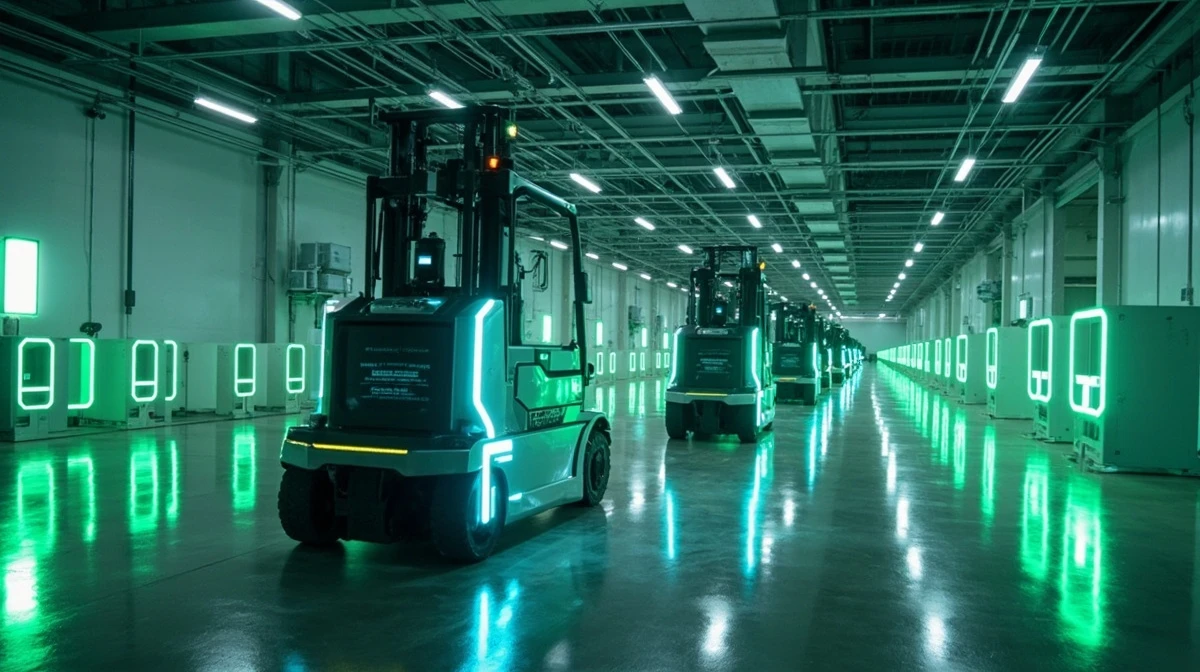
Capacity, load centre and mast height: reading the spec sheet correctly
Rated capacity is not a single number — it is a number at a stated load centre and lift height. A truck rated at 3,000 kg at a 500 mm load centre will not safely lift 3,000 kg at 1,200 mm. If your loads are long, wide or irregular, the effective capacity drops.
Mast height matters for a different reason: the collapsed height must clear your doorways and the extended height must reach your top rack beam. A three-stage mast gives more lift from a lower collapsed height, which is why it is common in high-bay warehousing.
The table below shows representative models from the Impetus range to illustrate how capacity and power source scale together. Full specifications are on the forklift and equipment catalog.
| Model | Capacity | Lift height | Power | Typical use |
|---|---|---|---|---|
| FB20 | 2,000 kg | 3,000 mm | Lithium | Indoor warehousing, distribution |
| FB35 | 3,500 kg | 3,000 mm | Lithium | Heavier indoor pallet and racking work |
| FD30 | 3,000 kg | 3,000 mm | Diesel | Yard and dock work |
| FD50 | 5,000 kg | 3,000 mm | Diesel | Heavy pallets, timber, steel |
| FD100 | 10,000 kg | 3,000 mm | Diesel | Big fork truck duties, containers |
| RT30 | 3,000 kg | 3,000 mm | Diesel | Construction fork truck, rough ground |
| R15 | 1,500–3,000 kg | 2,180 mm | Lithium | Narrow-aisle reach truck work |
Note that the reach truck figures are quoted as a range because the platform spans several configurations. Always confirm the exact rating for the unit you intend to buy.
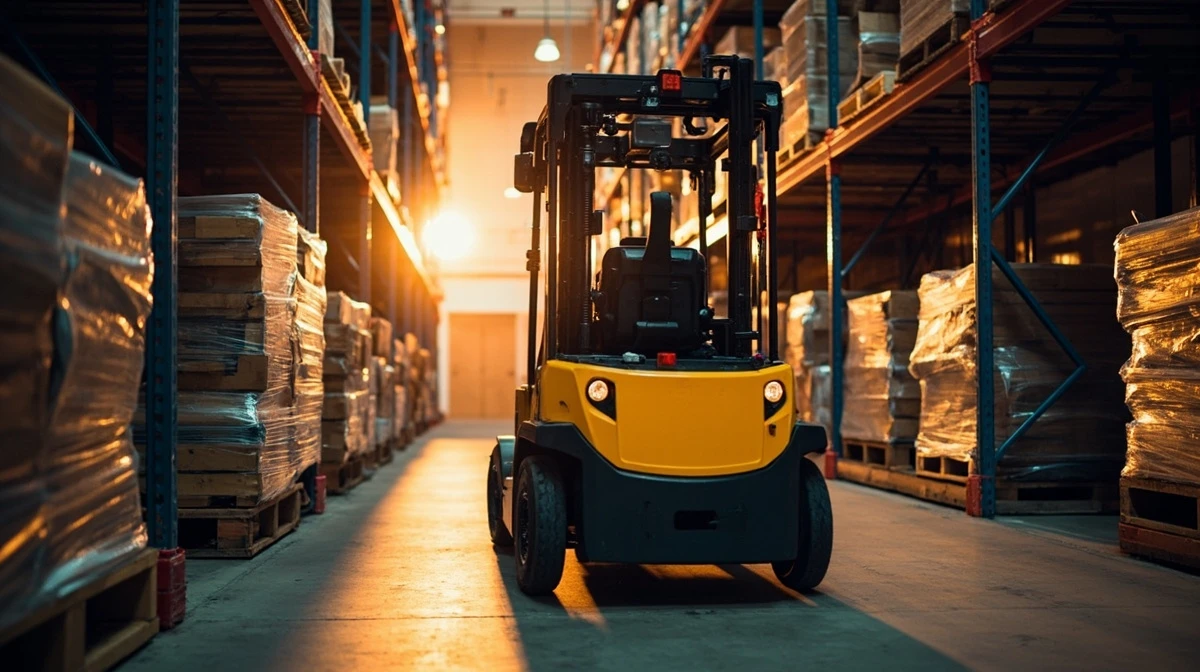
Attachments and forks: extending what one truck can do
A fork truck is a platform, not a single-purpose tool. Changing the attachment changes the job it can perform without buying a second machine.
- Side-shift and fork positioners reduce repositioning time on every pallet.
- Bale clamps, carton clamps and drum handlers convert a standard truck for specialised loads.
- Longer forks or fork extensions suit oversized loads — but they shift the load centre and reduce effective capacity.
- Jib and hook attachments turn the truck into a mobile lifting point for slung loads.
The critical rule: every attachment has its own weight and load centre, and both must be subtracted from the truck's rated capacity. A 3,000 kg truck with a heavy clamp may safely handle considerably less. Attachment suppliers should provide a de-rating chart.
Fork truck cost, training cost and dealer checks
Fork truck cost varies widely with capacity, power source, mast configuration and attachment package, so any single figure quoted without those variables is meaningless. The honest answer is that a 2-tonne lithium electric unit and a 10-tonne diesel machine are different capital decisions with different operating economics. Ask a fork truck dealer for a landed-cost breakdown that includes attachments, spare forks, battery and charger strategy, and freight.
Training is a separate and often underestimated line item. Fork lift truck training cost and fork lift truck training price depend on the certification framework in your country, whether training is in-house or outsourced, and how many operators need certifying. Budget for refresher training and for re-certification when you add a new truck class to the fleet — an operator certified on a counterbalance truck is not automatically certified on a reach truck.
When evaluating a dealer, check spare parts availability, service response time, whether they supply genuine forks and attachments, and whether they can support the truck over a ten-year horizon rather than just at the point of sale.
Frequently asked questions
What is the difference between a fork truck and a forklift?
There is no technical difference. Both terms describe the same powered industrial truck. "Forklift" is more common in North American warehousing, while "fork truck" and "lift truck" appear more often in heavy industry, ports and international trade documentation.
Should I buy a diesel or electric fork truck?
Choose diesel for outdoor yards, construction sites and continuous heavy-duty cycles where refuelling speed matters. Choose lithium electric for indoor warehousing, cold storage and any environment with air-quality or noise constraints. LPG is a middle option for mixed indoor/outdoor fleets.
How do I know what capacity I need?
Start with the heaviest load you will lift regularly, add the weight of any attachment, and check the load centre. Then confirm the truck's rated capacity at that load centre and at your required lift height — not just the headline number on the spec sheet.
Next step
If you are specifying a fork truck for a warehouse, yard or construction site, the fastest route to an accurate answer is to send your load weights, aisle widths, lift heights and power constraints to a supplier who builds the equipment. Impetus manufactures diesel, lithium electric, LPG, reach and rough-terrain trucks from 1.5 to 12 tonnes, along with the forks and attachments that go on them. Browse the full product categories, review technical guides on Impetus news and guides, or contact Impetus for a quote and we will match a configuration to your actual duty cycle.