
Electric Scissor Lift: How to Choose the Right Model
Learn how to size an electric scissor lift for indoor and slab work: platform capacity, duty cycle, floor loading, electric scissor lift price factors and fleet fit.
An electric scissor lift is a battery-powered aerial work platform that raises people and tools vertically on a crisscrossing steel stack. Because it produces no exhaust emissions at the point of use and runs far quieter than a diesel machine, it is the default choice for warehouses, factories, retail fit-outs, cold stores and any slab-on-grade interior where a combustion engine would be a ventilation, noise or contamination problem. This guide covers how to size one, what drives the electric scissor lift price, and how it fits alongside the rest of a materials handling fleet.
One clarification before we go further: a scissor lift raises people and equipment to a working height. It is not a substitute for a forklift, which moves loads horizontally and stacks them. Most industrial sites need both, and the buying decision is usually about which tasks belong to which machine.
What an electric scissor lift is actually good at
The scissor mechanism trades horizontal reach for vertical stability. A wide platform, a low centre of gravity and a compact chassis mean the machine can be driven into a racking aisle, positioned under a lighting run or a sprinkler line, and raised without outriggers. That combination is what makes it useful in occupied buildings where you cannot shut down production to install scaffolding.
Typical duties include:
- Overhead lighting, HVAC diffuser and sprinkler maintenance
- Racking inspection, repair and label replacement at height
- Painting, cladding and ceiling installation during fit-out
- Signage, camera and sensor installation in distribution centres
- Stocktaking and cycle counting on high-level pick faces
Two operating limits matter more than any brochure figure. First, the surface: electric slab scissor lifts are designed for firm, level, finished floors. Second, the floor itself — a loaded scissor lift concentrates a lot of mass into a small wheel footprint, and mezzanine decks or older suspended slabs may need a structural check before the machine goes up.
Indoor versus outdoor use
Electric scissor lifts are primarily indoor machines. Some models can be used outdoors on hard, level ground in dry conditions, but they are not rough-terrain equipment. If your work is on gravel, mud, slopes or unimproved ground, a diesel rough-terrain platform or an off-road forklift such as the RT25 or RT30 is the correct tool. Matching the machine to the surface prevents most of the accidents and breakdowns in this category.
How to size an electric scissor lift
Work through four numbers before you look at any quotation. Getting these right is the difference between a machine that earns its keep and one that sits in the corner.
- Working height. Define the highest point a person's hands must reach, then add a sensible margin. Platform height and working height are not the same figure — working height is normally quoted as platform height plus roughly two metres of reach.
- Platform capacity. Add the weight of every person, tool, material and fixture that will be on the deck at once. Many slab scissor lifts in this class are rated around 800 lb (about 360 kg), which covers two workers plus tools. If you routinely carry heavier material, you need a higher-rated platform or a different machine.
- Deck size and extension. A roll-out extension deck lets you reach over an obstruction without repositioning the base. If your work runs along walls, pipework or racking faces, this is worth specifying.
- Machine footprint and weight. Check doorway widths, lift capacity, aisle widths and floor loading. A compact chassis that fits through a standard door is often more valuable than extra platform height.
Power, batteries and duty cycle
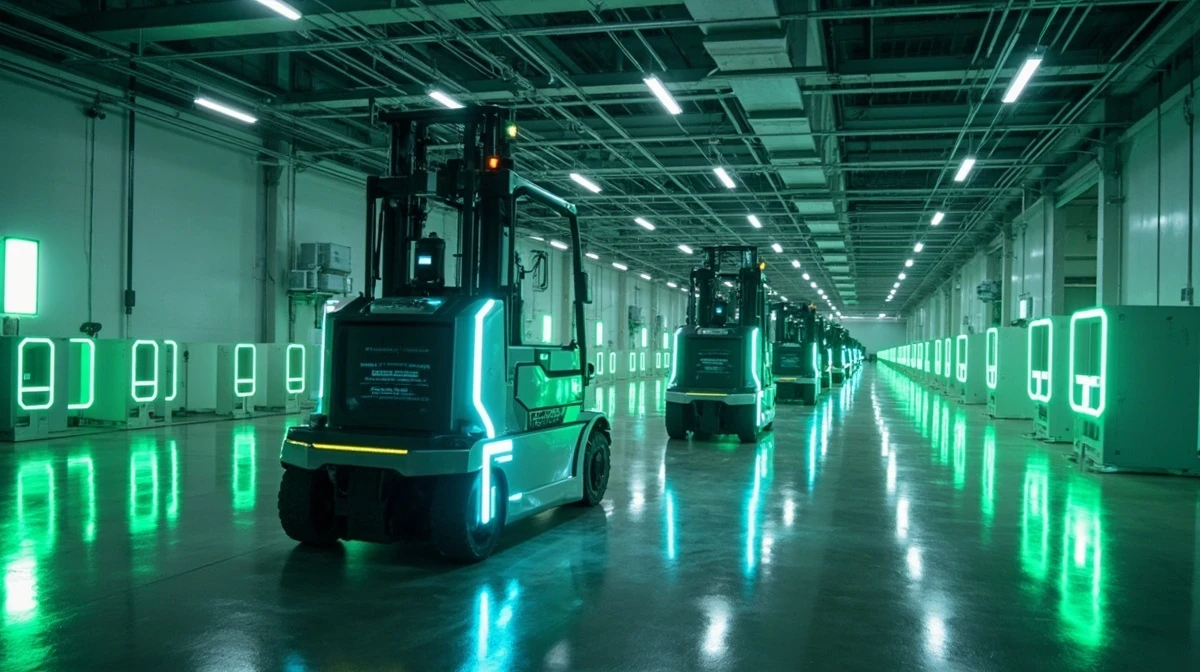
Nearly all electric scissor lifts use deep-cycle lead-acid or lithium battery packs driving electric motors. The practical questions are how long the machine runs on a charge, how long it takes to recharge, and whether the site can support opportunity charging.
Lead-acid packs are the established, lower-cost option. They need a dedicated charging bay with ventilation, and they generally want a full overnight charge rather than top-ups through the day. Lithium packs cost more up front but accept opportunity charging during breaks, hold voltage better as they discharge, and need no watering or equalisation routine. For a site running two or three shifts, that difference in uptime usually pays back the price gap.
The same logic applies across the wider electric fleet. Impetus lithium electric forklifts — from the FB15 at 1500 kg through to the FB100 at 10000 kg, all with 3000 mm lift heights — are specified on the same basis: how many hours per shift, how many shifts per day, and whether the truck can be charged in the operator's break rather than in a dedicated battery room.
Maintenance items that actually cost money
Electric drive removes engine servicing, oil changes and exhaust aftertreatment from the schedule. What remains is worth budgeting for: battery health and watering on lead-acid, hydraulic hose and cylinder inspection, scissor pivot and pin wear, tyre condition, and the annual thorough examination that most jurisdictions require for lifting equipment. Sealed AC drive motors reduce one common failure point, but they do not remove the inspection obligation.
Electric scissor lift price: what moves the number
There is no single list price for this category, because the specification range is wide. What you should understand is which variables the supplier is pricing.
| Cost driver | Effect on electric scissor lift price | When it is worth paying |
|---|---|---|
| Platform height and deck size | Higher and larger platforms cost more — more steel, bigger base, heavier battery | When the work genuinely reaches that height every week |
| Battery type | Lithium carries a premium over lead-acid | Multi-shift operation or no dedicated charging bay |
| Drive and motor configuration | Sealed AC drive and non-marking tyres add cost | Food, pharma, retail and clean-floor environments |
| Extension deck and accessories | Roll-out decks, work lights, pipe racks, power to platform | When they remove a repositioning step from every task |
| Certification and documentation | Region-specific compliance and inspection paperwork | Always — this is not a place to save |
When you compare electric scissor lift for sale listings, compare the full specification, not the headline price. A cheaper machine with a smaller deck, a lead-acid pack and no extension will often cost more per hour of completed work than a better-specified unit. Ask for the platform capacity, battery type, tyre type, deck dimensions and included documentation in writing.
Buy, rent or lease
Rental makes sense for short, one-off projects or for testing a height class before committing. Ownership makes sense once utilisation passes roughly a few days per month — at that point the rental cost curve crosses the purchase price. For fleets that mix scissor lifts with counterbalance trucks, buying both from one supplier simplifies spare parts, operator training and service scheduling.
Electric scissor lift versus forklift: which task goes where
These two machines are frequently confused because both lift. The distinction is simple: a scissor lift positions people at height; a forklift moves and stacks loads. Using the wrong one is a safety problem, not just an efficiency problem.
- Use a scissor lift when a person needs to work at height with tools and materials on a stable deck.
- Use a forklift when a load needs to be moved, lifted onto a rack, or loaded onto a vehicle.
- Never use a forklift as a personnel platform unless it is specifically designed and certified for that duty with a proper work platform and restraint system.
For the load-handling half of the job, the Impetus range covers 1500 kg to 10000 kg in lithium electric, 1500 kg to 12000 kg in diesel, and 1500 kg to 4000 kg in LPG, all with 3000 mm standard lift heights. Reach trucks such as the R15 and R20-45C handle narrow-aisle pallet movement where a counterbalance truck cannot turn. You can review the full line in the Impetus forklift and equipment catalog or browse all product categories to see how the ranges fit together.
Specifying for safety and compliance
Every electric scissor lift purchase should be accompanied by the correct documentation for your market, operator training, and a rescue plan for the event that the platform is stranded at height. Practical points that experienced buyers insist on:
- Guardrails, gate interlocks and a functional tilt alarm verified on delivery
- Emergency lowering that can be operated from the ground
- Non-marking tyres where floor finish or food safety is a factor
- A written pre-use inspection routine and a logged periodic examination
- Operators trained on the specific model, not just the category
If your site also runs forklifts, align the two training programmes. Operators who understand load centres, stability and floor conditions on a counterbalance truck tend to make better decisions on a scissor lift as well.
Frequently asked questions
Can an electric scissor lift be used outdoors?
Some models can be operated outdoors on firm, level, hard surfaces in dry conditions. They are not designed for rough terrain, slopes, soft ground or wet weather. For outdoor and site work on unprepared ground, a diesel rough-terrain platform or an off-road forklift such as the RT25 or RT30 is the appropriate machine.
What affects the electric scissor lift price most?
Platform height and deck size, battery type (lithium carries a premium over lead-acid), drive and motor configuration, extension decks and accessories, and the certification and documentation required for your market. Because the specification range is wide, there is no meaningful single list price — always compare full specifications rather than headline figures.
Do I need a scissor lift if I already have forklifts?
Yes, if anyone on site works at height. A forklift moves and stacks loads; it must not be used as a personnel platform unless it is specifically designed and certified for that duty. A scissor lift gives a stable, guarded deck for maintenance and installation work, while the forklift handles the pallet movement. Most industrial sites need both.
Next step
If you are specifying an electric scissor lift or building out a mixed fleet, send us the working height, platform capacity, floor type and shift pattern. Impetus has supplied forklifts, warehouse equipment, construction machinery and attachments to more than 150 countries for over 20 years, and we can advise on how an access platform fits alongside your electric and diesel trucks. Contact Impetus for a quote, or read more equipment guidance on our news and guides page.