
Electric FLT: How to Choose the Right Electric Forklift
Electric FLT buying guide: compare lithium electric forklifts from 1.5 to 10 tons, match capacity to duty cycle, and cut fleet running costs.
An electric FLT — the industry shorthand for an electric forklift truck — is now the default choice for warehouses, food plants, cold stores and most indoor logistics operations. The reason is straightforward: no exhaust emissions at the point of use, lower noise, fewer moving wear parts than an internal combustion drivetrain, and energy costs that are easier to forecast than diesel or LPG. But "electric" is not a single specification. Capacity, mast height, battery chemistry and chassis class all change what the truck can actually do on your floor. This guide walks through the decisions that matter when you specify an electric FLT, using the Impetus electric range as a concrete reference.
What an Electric FLT Is — and What It Is Not
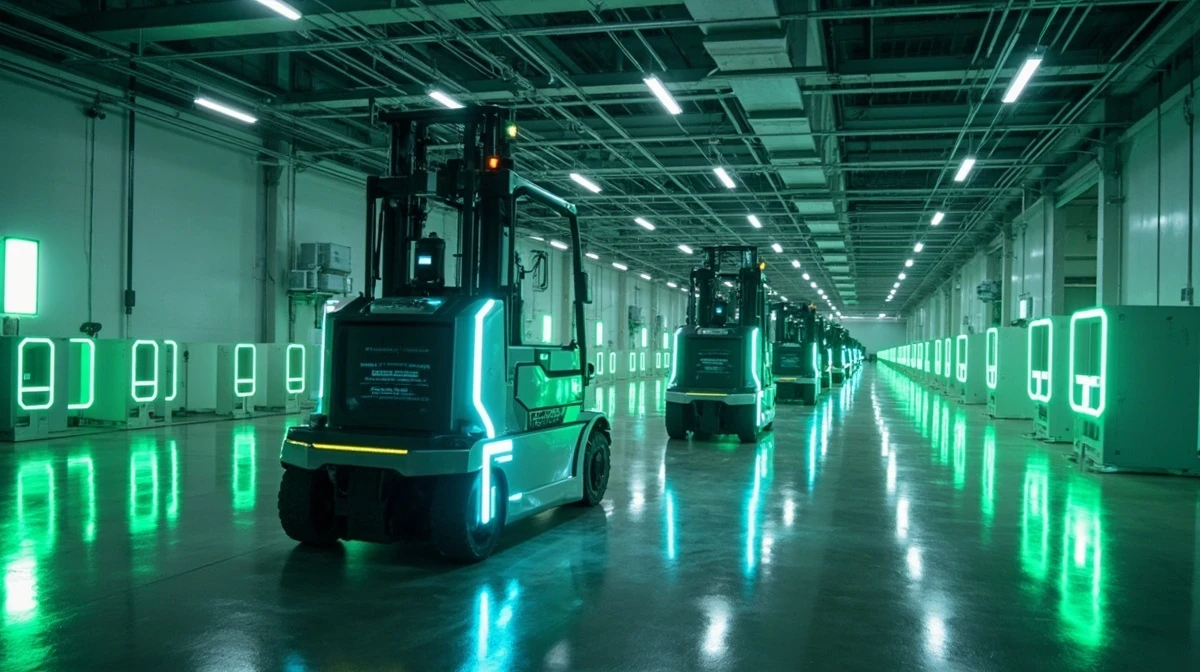
An electric forklift truck carries its energy in an on-board battery and drives the traction and hydraulic systems with electric motors. In the Impetus line-up, that means the FB series counterbalance trucks and the R-series reach trucks. The FB models run on lithium batteries and are offered from 1.5 tons up to 10 tons rated capacity, with standard lift heights of 3000 mm on most models. The reach trucks — R15, R20-45C and the YF-Reach stand-and-seat version — are designed for narrow-aisle pallet handling rather than general yard work.
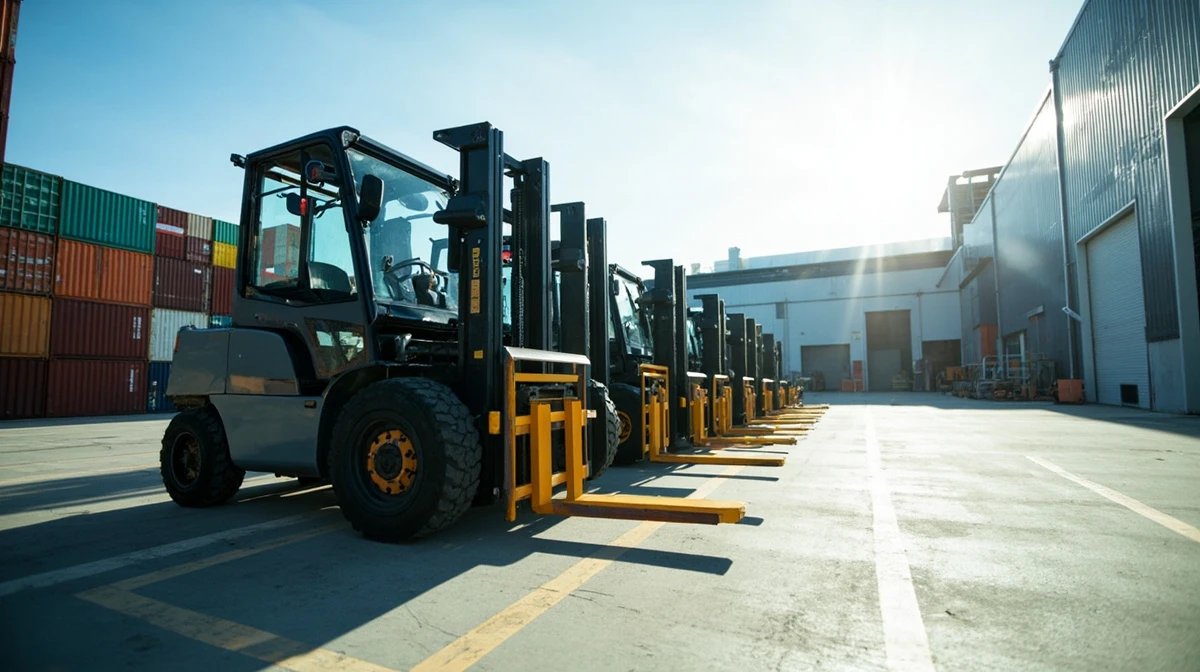
What an electric FLT is not is a universal replacement for every diesel machine. If your operation involves unpaved yards, heavy attachments, or continuous high-load cycles in mud and rain, an off-road diesel truck such as the RT25 or RT30 may still be the correct tool. The honest answer is that most sites need both: electric FLTs inside the building, diesel or LPG outside.
Matching Capacity to the Real Load, Not the Label
The single most common specification error is choosing capacity from the pallet weight alone. A forklift's rated capacity is defined at a stated load centre, and the figure drops as the load centre moves forward. Long loads, non-standard pallets and side-shifting attachments all reduce what the truck can safely lift at height.
Work through the load in three steps:
- Unit load weight — pallet plus goods plus any top frame or slip sheet.
- Load centre — measure from the face of the forks to the centre of gravity of the load. If it exceeds the rated load centre, derate the capacity.
- Lift height — residual capacity falls as the mast raises. A truck that lifts 2 tons at 500 mm may lift considerably less at 6 m.
For general warehouse work, the Impetus FB15, FB20 and FB25 cover the majority of palletised goods at 1500 kg, 2000 kg and 2500 kg respectively. Moving up, the FB30, FB35, FB38 and FB40 handle heavier industrial loads, while the FB45, FB50, FB60 and FB100 serve block handling, steel, and heavy manufacturing where 4.5 to 10 tons is routine.
Electric FLT Comparison: Impetus Models at a Glance
The table below summarises the main electric FLT classes in the Impetus range. Lift heights shown are the standard figures in the product data; confirm the exact configuration for your application before ordering.
| Model | Type | Rated capacity | Lift height | Power | Typical use |
|---|---|---|---|---|---|
| FB15 | Counterbalance | 1500 kg | 3000 mm | Lithium | Light warehousing, retail back-of-house |
| FB20 | Counterbalance | 2000 kg | 3000 mm | Lithium | General pallet handling |
| FB25 | Counterbalance | 2500 kg | 3000 mm | Lithium | Distribution centres |
| FB30 / FB35 / FB38 | Counterbalance | 3000–3800 kg | 3000 mm | Lithium | Manufacturing, heavy pallets |
| FB40 / FB45 / FB50 | Counterbalance | 4000–5000 kg | 3000 mm | Lithium | Steel, concrete, block handling |
| FB60 / FB100 | Counterbalance | 6000–10000 kg | 3000 mm | Lithium | Heavy industry, ports, yards |
| R15 / R20-45C | Reach truck | 1500–3000 kg | 2180 mm | Lithium | Narrow-aisle racking |
| YF-Reach | Reach truck (stand & seat) | 1500–3000 kg | 2180 mm | Electric | High-bay and double-deep racking |
Note that the FB35 appears in the product data with a 2092 mm lift height in one configuration and 3000 mm in another. This is normal — mast options change the figure. Always specify lift height and closed mast height together, because the closed height determines whether the truck fits through your doorways and under your sprinkler lines.
Lithium vs Lead-Acid: What Changes on the Floor
Lithium batteries have shifted the economics of the electric FLT. The practical differences that matter to an operations manager are:
- Opportunity charging — lithium packs accept partial charges without the memory damage associated with lead-acid, so trucks can be topped up during breaks rather than swapped.
- No battery room — you remove the ventilation, eyewash and PPE infrastructure that lead-acid charging requires.
- Stable voltage — performance does not sag as the state of charge falls, so lift and travel speed stay consistent through the shift.
- Weight and layout — a denser, more compact pack gives chassis designers more freedom, which is why many lithium trucks have a lower, more stable centre of gravity.
Lead-acid still has a place where capital cost is the dominant constraint and the duty cycle is a single predictable shift. If your trucks run two or three shifts, lithium usually pays back faster through eliminated battery changes and reduced labour.
Specifying for the Building, Not Just the Load
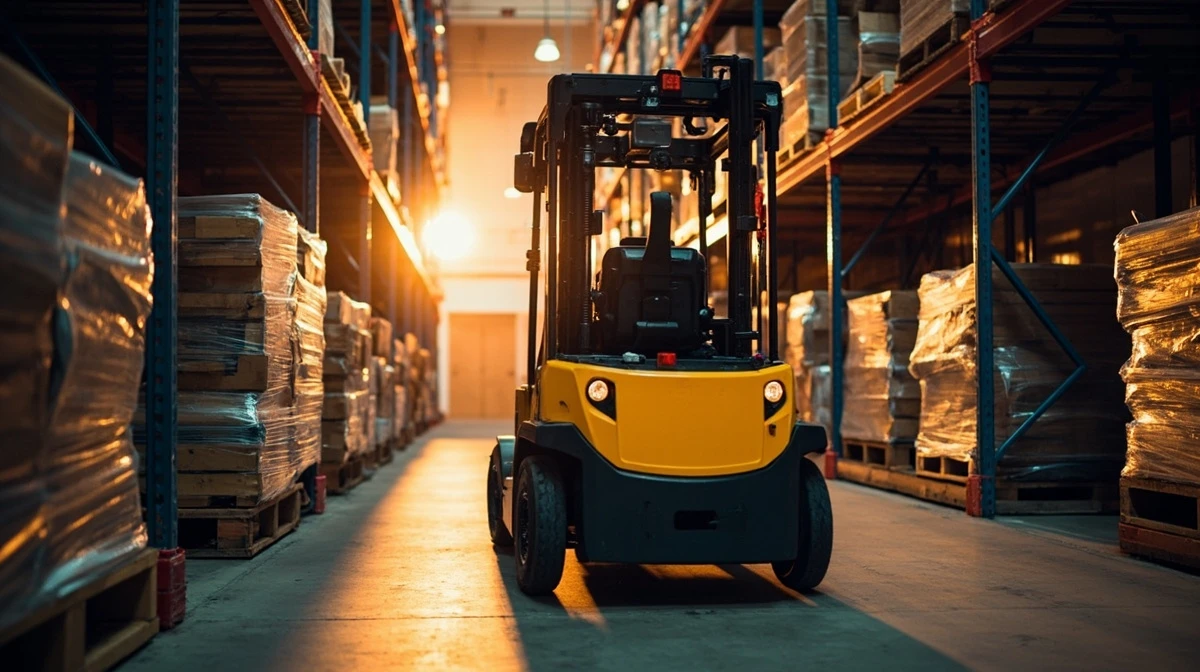
A forklift has to fit the aisle before it can move the pallet. Three building dimensions drive the chassis choice:
- Aisle width. Counterbalance trucks need more room to turn than reach trucks. If your racking is tight, the R15 or R20-45C will out-perform a counterbalance machine on throughput per square metre.
- Door and lift openings. Check the closed mast height and the overhead guard height against every opening the truck will pass through.
- Floor loading. Electric trucks concentrate weight differently from diesel machines. Confirm the point load with your structural engineer before committing to a model.
For cold stores and food production, electric is effectively mandatory because there are no combustion by-products to contaminate the product. For outdoor yards, the trade-off shifts toward diesel or LPG unless the surface is paved and the runs are short.
Charging Strategy and Fleet Uptime
Charging is a fleet design decision, not an afterthought. Before you order, map out where each truck will charge, what power is available at that point, and how long the truck can be out of service. A single-shift operation with one truck per charging point is simple. A three-shift operation needs either opportunity charging during breaks or a spare battery rotation — and the choice affects both the battery specification and the building electrical work.
Impetus supplies electric FLTs for export markets with charging configurations matched to the destination grid. If you are unsure which arrangement suits your site, the fastest route is to describe your shift pattern, aisle dimensions and unit loads to our team and let us propose a configuration.
Frequently Asked Questions
How long does an electric forklift run on one charge?
Runtime depends on battery capacity, load weight, lift height and how much of the shift involves travel versus lifting. Rather than quote a single figure, specify the truck against your measured duty cycle: hours of operation, number of lifts per hour and average load. Lithium trucks can also be opportunity-charged during breaks, which effectively extends available runtime across a shift.
Can an electric FLT work outdoors?
Yes, on paved or firm surfaces and in dry conditions. Electric counterbalance trucks handle loading docks and yard transfers well. For unpaved ground, deep mud or continuous heavy pulling, a diesel off-road model such as the RT25 or RT30 is the more durable choice.
What is the difference between a counterbalance electric forklift and a reach truck?
A counterbalance truck carries the load outside the front wheels and can drive straight into a trailer or container. A reach truck, such as the R15 or R20-45C, moves the mast forward to pick the pallet and retracts it over the base legs, which lets it work in much narrower aisles. Reach trucks are faster in high-bay racking; counterbalance trucks are more versatile across mixed tasks.
Next Step
Choosing an electric FLT comes down to four numbers: unit load weight, load centre, required lift height and aisle width. Get those right and the model selection is usually obvious. Browse the full Impetus forklift and equipment catalog to compare the FB and R series, review all product categories for attachments and warehouse equipment, or read more buying and maintenance guidance in our news and guides section. When you are ready to specify, contact Impetus for a quote with your load data and site dimensions, and we will match a configuration to your operation.