
Cherry Picker Forklift: A Warehouse Buyer's Guide
What a cherry picker forklift is, how it differs from a standard counterbalance truck, and how to specify the right unit for your warehouse aisle and load.
A cherry picker forklift is an elevated order picking truck that lifts the operator — not just the pallet — to the racking face so goods can be picked by hand at height. In most warehouses the term covers order pickers and stock pickers, machines that raise a working platform and its operator to a shelf level inside a narrow aisle. It is a distinct category from the counterbalance forklift that moves pallets on and off the dock, and understanding where the two overlap is the first step in specifying the right fleet.
This guide explains how a cherry picker forklift actually works, where it earns its cost, what it cannot do, and how to combine it with counterbalance and reach trucks so the whole warehouse runs on one coherent equipment plan.
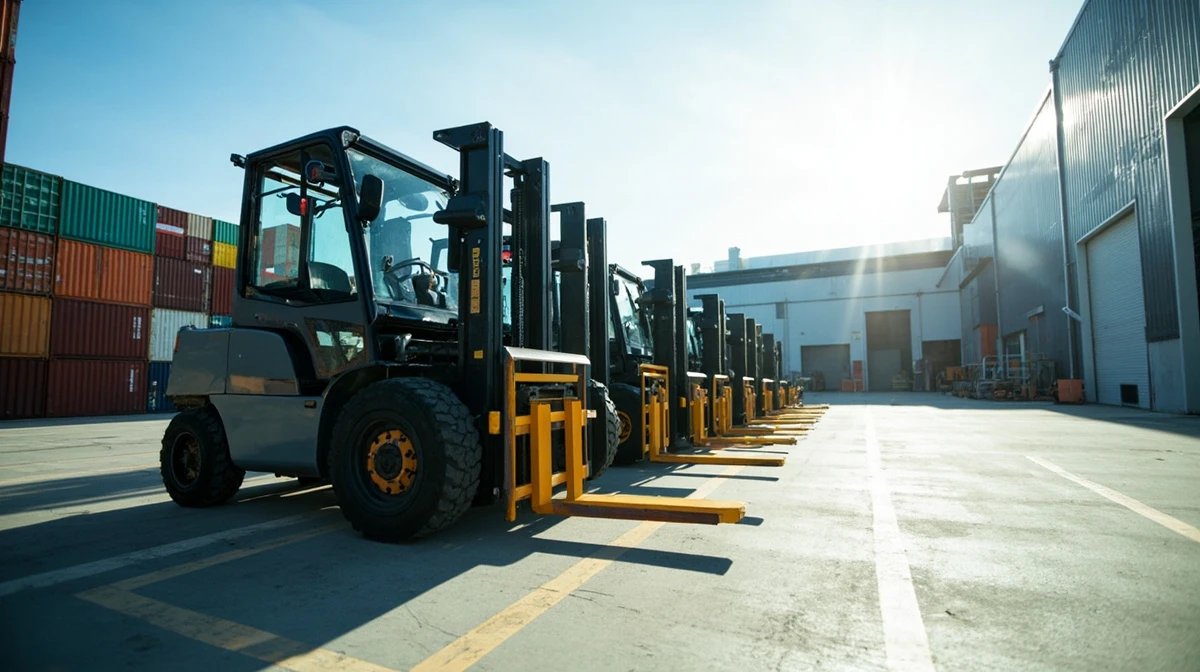
What a cherry picker forklift is — and what it is not
The name is a warehouse shorthand. In practice, a cherry picker forklift is a purpose-built order picker: a truck with a mast, a railed operator platform, and controls that let the operator raise the platform to the pick face and travel along the aisle while elevated. The operator wears a harness and works inside the platform, pulling cases or totes from the rack and placing them on a pallet carried on the truck's forks or on the platform itself.
What it is not is a general-purpose lifting truck. Because the platform is designed for a person, the machine is built around operator safety, smooth mast travel and precise positioning rather than around heavy pallet throughput. For moving a 2,000 kg pallet from a container to a rack, you need a counterbalance forklift. For picking 40 individual cartons from a 7-metre rack face, you need an order picker.
The common confusion comes from the word "forklift." Many buyers searching for a cherry picker forklift are actually trying to solve a mixed problem: they need high-reach picking and they also need general pallet handling. That usually means two machine types, not one.
How an order picker works in a narrow aisle
An order picker is engineered backwards from the operator. The mast raises a platform, the platform carries the person, and the person picks directly into a pallet or tote. That single design decision drives everything else:
- Platform and gate: a railed, gated working area with a harness anchor point, so the operator cannot step out at height.
- Mast and lift height: a tall mast tuned for smooth, controlled travel rather than raw lifting force.
- Travel and steering: tight turning geometry so the truck can work the full length of a narrow aisle without repositioning.
- Controls: ergonomic, reachable from the platform, because the operator is driving and picking at the same time.
- Power: electric drive, which keeps the aisle free of exhaust and keeps noise low enough for voice picking systems.
The result is a machine that retrieves slow-moving SKUs from high shelving quickly, without the double handling that comes from bringing a pallet down first and picking it on the floor.
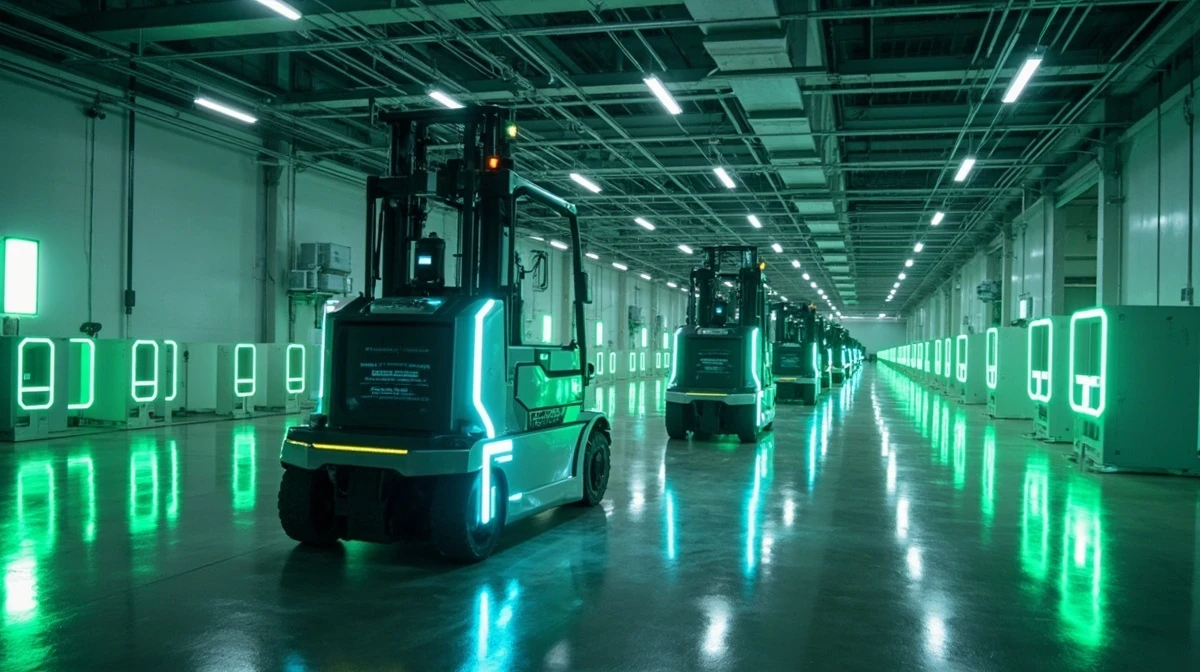
Cherry picker forklift vs counterbalance and reach trucks
Most warehouses end up running more than one truck type. The table below sets out the division of labour in plain terms. Note that Impetus builds counterbalance forklifts and reach trucks — the machines that feed, replenish and clear the aisles that order pickers work in.
| Task | Cherry picker / order picker | Counterbalance forklift | Reach truck |
|---|---|---|---|
| Primary job | Pick individual items at height | Move pallets and unit loads | Put away and retrieve full pallets in narrow aisles |
| Operator position | Elevated on the platform | Seated in the cab | Seated, with reach mast |
| Typical load | Cases, totes, single items | Palletised loads up to the truck's rated capacity | Palletised loads at high rack levels |
| Best environment | High-bay picking aisles | Docks, yards, mixed indoor/outdoor | Narrow aisle pallet storage |
| Impetus models | Not manufactured by Impetus | FD20–FD120C diesel, FB15–FB100 electric, FG15–FG40 LPG | R15, R20-45C, YF-Reach |
For a full view of what Impetus builds across these categories, see the forklift and equipment catalog or browse all product categories.
Specifying the counterbalance side of the fleet
If you are adding picking capacity, you are almost certainly also reviewing the trucks that feed the pick faces. Impetus counterbalance forklifts are rated from 2,000 kg to 12,000 kg with a standard 3,000 mm lift, in diesel, lithium-electric and LPG configurations:
- Diesel: FD20, FD25, FD30, FD35, FD38, FD40, FD50, FD60, FD70, FD80, FD100 and FD120C — robust chassis for docks, yards and heavy pallet work.
- Lithium electric: FB15, FB20, FB25, FB30, FB35, FB38, FB40, FB45, FB50, FB60 and FB100 — zero exhaust emission, suited to indoor handling and food or cold-chain areas.
- LPG / gasoline: FG15, FG18, FG20, FG25, FG30, FG35 and FG40 — a practical middle ground where refuelling speed matters more than emissions.
- Reach trucks: R15, R20-45C and YF-Reach for pallet put-away and retrieval in aisles where a counterbalance truck cannot turn.
For outdoor yards and uneven ground, the RT25, RT30, RT35 and RT40 off-road diesel forklifts in 2WD or 4WD handle the conditions a warehouse truck should never see.
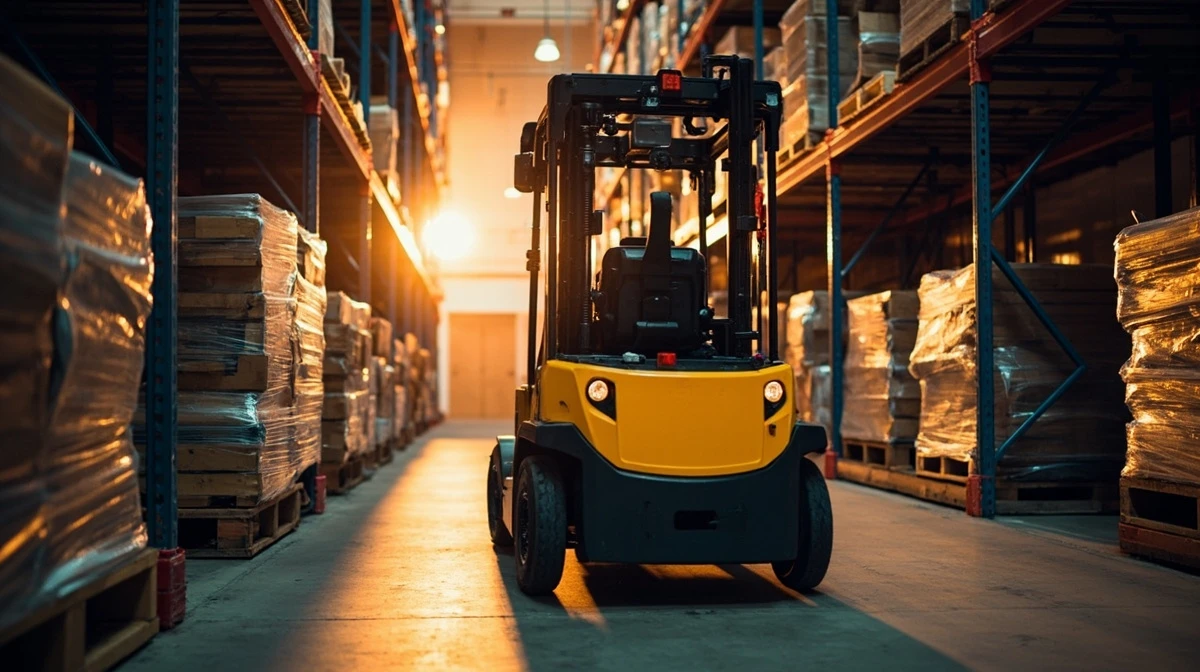
Safety, certification and operating rules
Order picker work is regulated work. The recurring requirements in job listings and operator manuals are consistent: a valid forklift certification specific to the truck type, fall protection equipment including a harness, and protective footwear. Beyond paperwork, the practical rules that keep an order picker safe are:
- Never travel with the platform elevated beyond the manufacturer's stated travel height.
- Keep the platform gate closed and the harness attached whenever the platform leaves the ground.
- Match travel speed to aisle width, floor condition and visibility — not to the pick rate target.
- Inspect the mast, chains, platform gate and harness anchor before each shift.
- Keep the aisle clear of debris and confirm rack beam heights match the truck's rated lift.
An order picker is only as productive as the aisle it works in. Rack alignment, floor flatness and lighting matter as much as the truck specification.
FAQ: cherry picker forklift questions buyers ask
Is a cherry picker forklift the same as an order picker?
In warehouse usage, yes — cherry picker forklift, order picker and stock picker are used interchangeably for a truck that raises the operator on a platform to pick at height. The term is sometimes used loosely for any boom lift, but in a warehouse context it means an order picking truck.
Can a counterbalance forklift replace a cherry picker forklift?
No. A counterbalance forklift moves palletised loads and keeps the operator at floor level; it cannot position a person at a rack face. The two are complementary: counterbalance trucks replenish and clear pallets, order pickers break those pallets down into individual picks at height.
What should I check before buying a cherry picker forklift?
Confirm the maximum rack height you need to reach, the aisle width available, the weight and size of the items being picked, and the power source your facility can support. Then confirm the certification and training pathway for your operators, because an order picker cannot be run without it.
Next step
If you are building or refreshing a warehouse fleet, the picking truck is only one line item. Impetus has manufactured counterbalance forklifts, reach trucks and off-road trucks for global export for more than 20 years, with diesel, lithium-electric and LPG options from 1,500 kg to 12,000 kg. Tell us your aisle width, rack height and throughput target, and we will help you map the right mix of order picking, reach and counterbalance equipment. Contact Impetus for a quote, or read more equipment guides on our news and guides page.