
Bucket Conveyor Guide: Types, Selection & Forklift Integration
Bucket conveyor guide for plant engineers: types, bucket profiles, selection criteria, discharge methods and how to pair a bucket conveyor with the right forklift.
A bucket conveyor moves bulk material vertically or along an incline by carrying it in discrete buckets mounted on a continuous belt or chain. For plant engineers, the appeal is simple: one compact machine replaces a long inclined belt, a pit, or a second transfer point, and it lifts product to the next process stage without spillage. This guide explains how bucket conveyors work, which type suits which duty, how to select bucket profiles and discharge methods, and how vertical conveying fits alongside the forklifts and warehouse equipment that feed and empty it.
How a Bucket Conveyor Works
Every bucket conveyor shares the same basic anatomy: a head section with the drive unit, a boot or loading section at the bottom, an intermediate casing, and a continuous carrier — either a belt or a chain — fitted with buckets at regular pitch. Material enters the boot, is scooped or fed into the buckets, travels upward through the casing, and is discharged at the head by centrifugal throw or by gravity as the bucket inverts.
Two operating principles dominate:
- Centrifugal discharge — the head pulley runs fast enough that material is thrown clear of the bucket as it rounds the wheel. Best for free-flowing, small-particle products.
- Positive or gravity discharge — buckets are spaced further apart and travel slower, tipping their contents onto a chute. Suited to fragile or lumpy materials that must not be thrown.
Because buckets carry material in pockets rather than on an open surface, a bucket conveyor handles steep angles and tight footprints that a conventional belt cannot. It is also gentler than a screw or drag conveyor on product that must arrive intact.
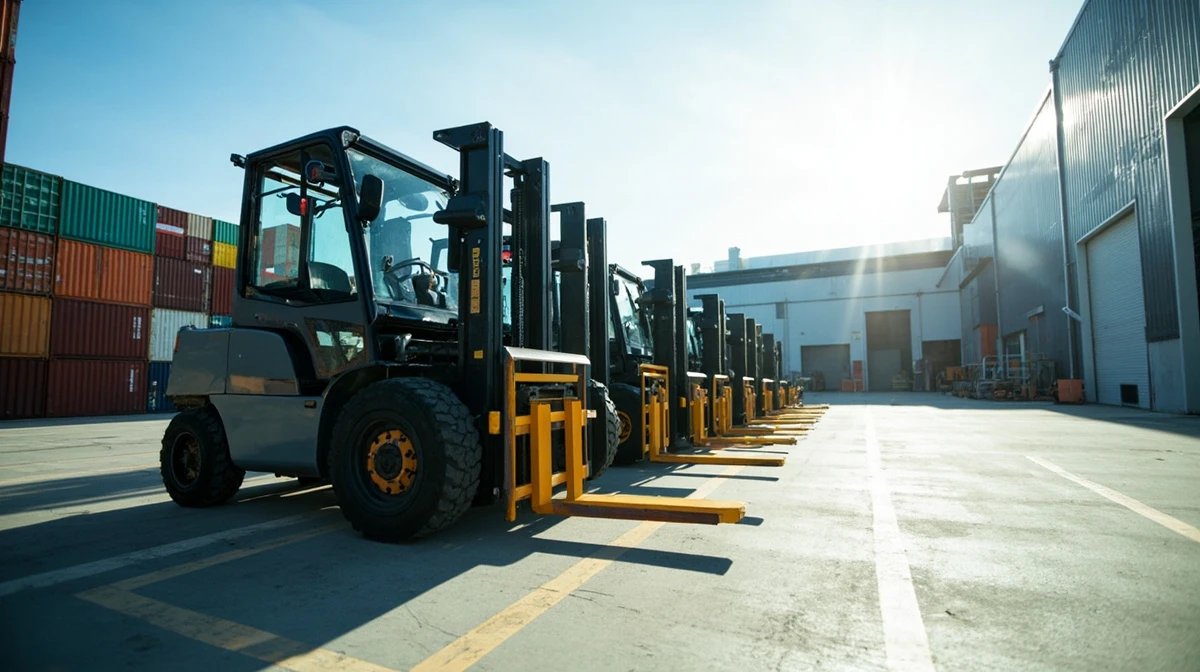
Types of Bucket Conveyors and Where Each Fits
Selection starts with the carrier and the discharge behaviour, not with tonnage alone.
Belt-type bucket elevators
A rubber or synthetic belt carries the buckets. Belt types run at higher speeds and suit high-capacity, free-flowing duties — grain, sand, aggregate, cement, fertiliser. They are the default choice when throughput matters more than delicate handling.
Chain-type bucket elevators
One or two strands of chain carry the buckets. Chain types tolerate higher temperatures, abrasive or lumpy material, and heavier bucket loads, which is why they appear in mining, foundry and heavy construction duty. They run slower but survive shock loading better than belts.
Pivoting-bucket and swing-bucket conveyors
Here the buckets are mounted on pivots and stay upright throughout the circuit, tipping only at a designated discharge station. This allows horizontal runs, bends and multiple discharge points on one machine — useful in food, pet food and packaging plants where product must be delivered to several lines from a single feed.
Continuous-bucket conveyors
Buckets are mounted close together to form an almost continuous wall. They are used for fine, dusty or easily aerated powders, and for gentle handling where tumbling would cause breakage or segregation.
Bucket Conveyor Selection Criteria
Most bucket conveyor problems trace back to a specification decision made too early. Work through these factors in order.
- Material characteristics — bulk density, particle size, abrasiveness, moisture, temperature and flowability. Wet, sticky or sludge-like material is a poor fit because it will not discharge cleanly from the bucket.
- Capacity and speed — required tonnes or cubic metres per hour, converted into bucket volume, pitch and chain or belt speed.
- Lift height and layout — total vertical rise, plus any horizontal or inclined sections, determines whether a straight elevator or a pivoting-bucket circuit is required.
- Discharge arrangement — single-point centrifugal, single-point gravity, or multiple stations.
- Bucket profile and material — profile governs how the bucket fills and empties; bucket material governs wear life against abrasive product.
- Environment — dust-tight or food-grade casings, washdown requirements, and any explosion-risk classification.
- Access and maintenance — inspection doors at the boot and head, and enough clearance to change a bucket or a section of chain without dismantling the casing.
Bucket Profiles, Materials and Discharge at a Glance
The table below summarises the practical trade-offs engineers weigh most often. It is a decision aid, not a substitute for a duty-specific calculation.
| Factor | Option A | Option B | Typical use |
|---|---|---|---|
| Carrier | Belt | Chain | Belt for free-flowing, high-speed duty; chain for abrasive, hot or lumpy material |
| Discharge | Centrifugal | Gravity / positive | Centrifugal for small particles; gravity for fragile or lumpy product |
| Bucket spacing | Spaced buckets | Continuous buckets | Spaced for general bulk; continuous for fine powders and gentle handling |
| Bucket material | Steel | Polymer or non-metallic | Steel for abrasion; polymer for food contact and reduced product damage |
| Routing | Vertical only | Vertical plus horizontal or bends | Pivoting-bucket circuits where one feed serves several discharge points |
Two rules of thumb are worth remembering. First, the bucket must fill completely and empty completely — if either fails, the machine is misapplied rather than underpowered. Second, the boot is the wear point: fine abrasive material that leaks past the buckets will grind the boot long before the head shows any sign of trouble.
Integrating a Bucket Conveyor with Forklift and Warehouse Operations
A bucket conveyor rarely stands alone. Material arrives in bulk bags, sacks or pallets, and the machine that puts it into the boot is usually a forklift. Getting that interface right is what keeps the line running.
For indoor plants, lithium electric forklifts such as the FB15, FB20, FB25, FB30, FB35, FB38, FB40, FB45, FB50, FB60 and FB100 handle bag and pallet feeding with zero local emissions — an advantage where the bucket conveyor boot sits inside a sealed production hall. Where the conveyor is fed from an outdoor stockpile or a construction site, diesel models from the FD20 and FD25 up through the FD30, FD35, FD38, FD40, FD50, FD60, FD70, FD80, FD100 and FD120C provide the torque and duty cycle for continuous loading. Off-road variants such as the RT25, RT30, RT35 and RT40 are built for unpaved yards where a standard counterbalance truck would struggle.
In tight warehouses, reach trucks including the R15, R20-45C and YF-Reach series put pallets into position without the aisle width a counterbalance truck needs. LPG models such as the FG15, FG18, FG20, FG25, FG30, FG35 and FG40 are a common compromise where diesel exhaust is unacceptable but fast refuelling is still required.
Forklift attachments matter too. Bulk bag handlers, tipping skips and specialised forks let one truck feed the bucket conveyor boot, then switch to pallet handling without a second machine. The correct attachment is determined by the bag or container, the lift height of the boot hopper, and the truck's rated capacity at that load centre — a 2,000 kg truck lifting a 1,500 kg bulk bag at extended reach is not the same duty as lifting it close to the carriage.
Frequently Asked Questions
What is the difference between a bucket conveyor and a bucket elevator?
The terms overlap. A bucket elevator usually refers to a purely vertical machine, while a bucket conveyor can include horizontal runs, inclines and bends — for example a pivoting-bucket circuit that carries product around a plant to several discharge points. Both use buckets on a belt or chain as the carrying medium.
Can a bucket conveyor handle wet or sticky material?
Generally no. Bucket conveyors are designed for dry, free-flowing or dusty bulk material. Wet, sticky or sludge-like products tend to cling to the bucket and fail to discharge cleanly, which leads to build-up, imbalance and premature wear. For those duties a different conveying principle is normally the better answer.
How do I choose between a belt-type and a chain-type bucket conveyor?
Start with the material and the duty cycle. Belt types suit high-speed, high-capacity handling of free-flowing products. Chain types suit abrasive, hot, lumpy or heavy material and tolerate shock loading better. If the product is fragile or must be kept intact, prioritise a slower gravity-discharge arrangement over a fast centrifugal one.
Next Step
Specifying a bucket conveyor and the forklift fleet that feeds it is one exercise, not two. Impetus has supplied forklift trucks, warehouse equipment, construction machinery and attachments to buyers in more than 150 countries for over 20 years, and can help you match truck capacity, attachment and lift height to the loading point of your conveyor. Browse the Impetus forklift & equipment catalog, review the full product categories, or read more technical guidance in our news & guides section. To discuss a specific duty, contact Impetus for a quote.